Soft Neck Brace Benefits: What Does It Really Do?
A soft neck brace can make an irritated neck feel more supported, but its benefits are narrower than many product descriptions suggest. The foam collar does not realign the spine, repair damaged tissue, or fully immobilize the neck. Its main role is to provide temporary comfort, reduce the effort of holding the head upright, and remind the wearer to avoid movements that aggravate symptoms.
That distinction matters. Used for the right reason and for a limited period, a soft cervical collar may be a useful part of recovery. Used continuously without medical guidance, it can encourage stiffness and reduce normal muscle activity. The benefit depends on the cause of the pain, the fit of the collar, and how it is combined with movement and treatment.
What Is a Soft Neck Brace Designed to Do?
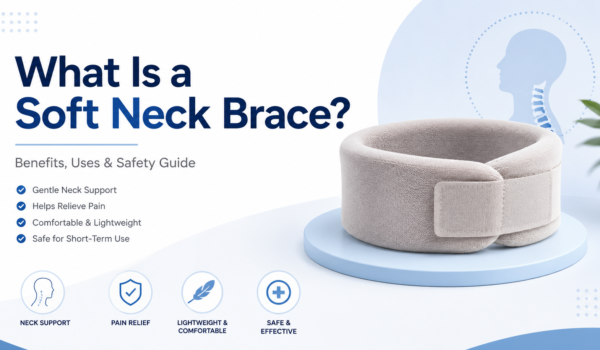
A soft neck brace—also called a soft cervical collar—is a ring of contoured foam covered in fabric. It sits beneath the jaw and wraps around the neck. Unlike a rigid cervical collar, it bends easily and allows most neck movement.
Its limited rigidity is intentional. A soft collar is generally used for comfort and light support, not to stabilize a suspected fracture or other unstable cervical injury. Research comparing cervical devices has found that soft collars restrict motion poorly, especially when compared with rigid devices. That makes them inappropriate when true immobilization is required.
If you are unfamiliar with the device, start with our guide to what a soft neck brace is and how it works.
Potential Benefits of a Soft Neck Brace
Temporary relief from muscle fatigue
The adult head places a continuous load on the neck muscles. When those muscles are irritated or tired, the light contact beneath the jaw may make the head feel easier to support. Some people describe this as a resting effect rather than a true reduction in the head’s weight.
This benefit is usually temporary. The collar should not replace the muscles’ normal stabilizing role for long periods.
A reminder to avoid painful movement
Because the foam touches the jaw and neck, it provides sensory feedback when the wearer turns, bends, or extends the head. That reminder may reduce sudden or excessive movements that provoke discomfort.
The collar does not stop motion completely. A person can still rotate and bend the neck while wearing one, so it should never be treated as protective equipment for an unstable injury.
Short-term comfort during selected activities
A clinician may recommend intermittent use during an activity that predictably increases symptoms, such as a short car journey as a passenger or a limited period of desk work. The purpose is to make the activity more tolerable while the underlying problem is assessed and addressed.
Driving while wearing any collar is different. Restricted head turning can make it difficult to check mirrors and blind spots, so driving is generally unsafe while a collar limits comfortable movement.
Support during clinician-directed recovery
Some patients receive a soft collar after a procedure or as part of a specific treatment plan. In that situation, the collar’s value comes from following individualized instructions—not from a universal wearing schedule. Postoperative and injury protocols vary widely, and a surgeon’s directions take priority over general online advice.
Greater awareness of neck position
A soft collar can act as a cue to keep the head closer to a neutral position. That may help someone notice habits such as repeatedly looking down at a phone. It does not permanently correct posture, however. Lasting changes usually require adjustments to the work environment, regular movement, and appropriate strengthening.
What the Evidence Says
The evidence is more cautious than many advertisements. Soft collars may feel supportive, yet they do not consistently improve long-term outcomes for common neck complaints.
A randomized trial involving people with whiplash-related pain found no significant difference in recovery or improvement between a soft-collar group and usual care. Another randomized study comparing two days with ten days of collar use after acute whiplash found no meaningful difference in pain, range of motion, or disability. Current guidance commonly favors early, tolerable movement for uncomplicated neck pain unless a clinician gives different instructions.
This does not mean nobody feels better in a collar. It means short-term symptom relief should not be confused with faster healing or a proven long-term cure.
| Possible benefit | What the collar may do | Important limit |
|---|---|---|
| Comfort | Reduce the feeling of strain for a short period | Relief varies and may be temporary |
| Movement reminder | Cue the wearer to move more carefully | Does not immobilize the cervical spine |
| Activity support | Make selected tasks more tolerable | Should not enable risky or painful activity |
| Position awareness | Encourage a neutral head position | Does not permanently correct posture |
| Recovery support | Follow a clinician’s specific protocol | Duration must match the diagnosis |
When Might a Soft Neck Brace Be Helpful?
A healthcare professional may consider short-term or intermittent use for selected cases, including:
- temporary muscular neck discomfort;
- a painful flare in which movement needs to be modified briefly;
- comfort after certain procedures;
- a clinician-directed transition from a more supportive device; or
- specific activities during an individualized rehabilitation plan.
The diagnosis matters more than the symptom alone. “Neck pain” can come from muscles, joints, discs, nerves, inflammatory conditions, infection, or trauma. A collar that feels reasonable for a mild muscular strain may be unsuitable for another condition.
Read our evidence-focused guide to using a soft neck brace for neck pain for a closer look at who may—and may not—benefit.
When the Benefits May Be Overstated
Be skeptical of claims that a soft collar can “decompress” the cervical spine, cure a pinched nerve, restore spinal alignment, or correct forward-head posture permanently. A foam collar cannot establish those outcomes on its own.
It is also risky to use symptom relief as proof that an injury is minor. Pain can become quieter while an underlying problem remains. New weakness, numbness, trouble walking, severe headache after trauma, loss of coordination, fever with neck stiffness, or problems with breathing or swallowing require prompt medical assessment.
Why Wearing It Longer Is Not Always Better
The neck needs normal, tolerable movement to maintain strength and mobility. Wearing a collar continuously may reduce how much the muscles work and can contribute to stiffness or dependence on the sensation of support. The American Academy of Orthopaedic Surgeons notes that soft collars should be worn only for a short period because long-term wear may decrease neck-muscle strength.
There is no single safe duration for every person. The correct schedule depends on the reason for use. Our guide on how long to wear a soft neck brace explains the factors that determine timing.
How to Get the Most Benefit Safely
If a clinician has recommended a soft collar:
- Follow the prescribed schedule rather than wearing it whenever discomfort appears.
- Check that it supports the chin without pushing the head backward.
- Make sure breathing and swallowing remain comfortable.
- Keep the skin and collar clean and dry.
- Remove it for exercises or hygiene only as instructed.
- Report increasing pain, skin irritation, numbness, weakness, or dizziness.
A brace that is too tall can force the chin upward. One that is too short may provide little support. A tight collar can irritate the skin and make swallowing uncomfortable. Fit is part of safe use, not a cosmetic detail.
Frequently Asked Questions
Does a soft neck brace actually help?
It may provide temporary comfort and movement awareness for selected people. Evidence does not show that it reliably speeds long-term recovery from uncomplicated neck pain or whiplash.
Does a soft collar hold the neck still?
No. Soft collars allow considerable movement and should not be used to stabilize a suspected fracture or unstable cervical injury.
Can a soft neck brace fix poor posture?
It may briefly remind you to keep your head neutral, but it cannot permanently correct posture. Ergonomic changes, movement breaks, and appropriate exercise are more important for lasting improvement.
Can I wear a soft neck brace every day?
Daily use should be based on professional advice and a clear reason. Continuous, prolonged use may contribute to stiffness and reduced muscle activity.
The Bottom Line
The most realistic soft neck brace benefits are temporary comfort, light support, and a reminder to avoid painful movement. A soft collar is not a cure and does not provide reliable spinal immobilization. It works best when its purpose and duration are clear and when it supports—rather than replaces—an appropriate recovery plan.
References
- Bäcker et al. Cervical immobilization in trauma patients: soft collars better than rigid collars?
- Gennis et al. The effect of soft cervical collars on persistent neck pain in patients with whiplash injury.
- Dehner et al. Two versus ten days of soft-collar immobilization after acute whiplash.
- American Academy of Orthopaedic Surgeons: Cervical spinal cord compression.
- NHS: Neck pain and stiff neck.