
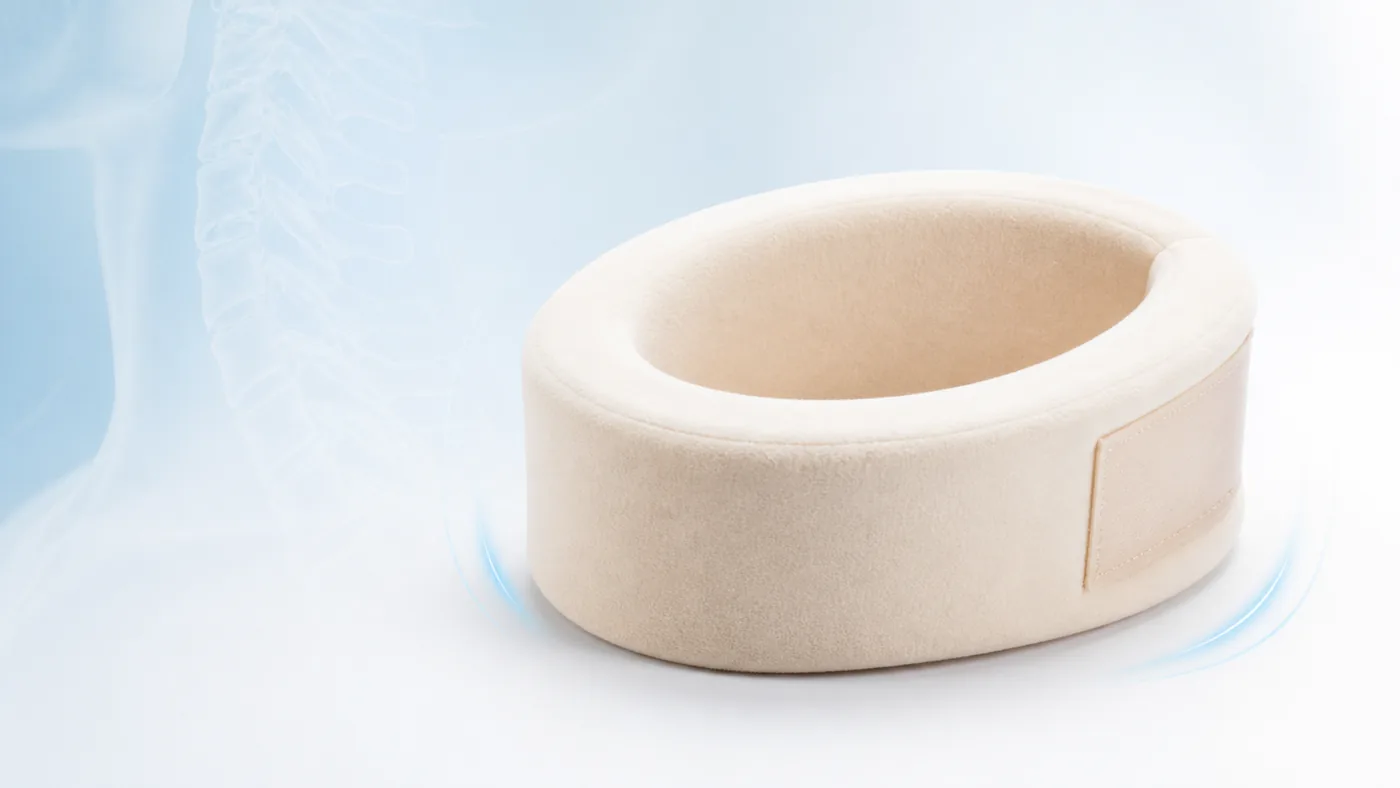
What Is a Soft Neck Brace? Uses & Safety
The short answer: A soft neck brace is a padded, flexible collar worn around the neck. It may be used for selected short-term support needs, but it does not stabilize the neck like a prescribed rigid collar. It is not a routine solution for everyday neck pain or whiplash.
This guide explains the device, its limits and the questions to ask—not whether you personally need one.
Shopping pages often make a foam collar sound like an easy answer to neck discomfort. The more useful starting point is understanding what the device does, what evidence supports it, and whether a clinician has a specific reason for recommending it. Availability online does not establish medical suitability.
What is a soft neck brace?
A soft neck brace, also called a soft cervical collar, usually consists of shaped foam with a fabric cover and an adjustable closure. Construction varies: some models use different foam densities, collar heights or lengths. For example, the ProCare Form Fit manufacturer listing describes firm- and medium-density foam versions with a cotton cover.
“Soft neck brace” describes a category, not one standardized product. Two collars with similar names may have different measurements and instructions. Check the exact model rather than borrowing a sizing rule from another brand.
What can it do—and what can’t it do?
A soft collar offers a flexible support surface around the neck. Some people report temporary comfort, but feeling supported is not proof of faster healing or correction of the cause of pain. Research on collars depends on the condition, device and treatment plan being studied.
A review of cervical collars for neck pain describes uncertainty about their use and cautions against recommending them universally for whiplash. Do not interpret a collar’s advertised “support” as evidence that it repairs an injury, permanently fixes posture or prevents future pain.
- Product specifications describe the material, shape and available sizes.
- Clinical evidence asks whether a treatment improves meaningful outcomes.
- Individual instructions explain what is appropriate in your own care.
These are three different questions. Our benefits guide and model comparison tool address different parts of that research; neither is a personal prescription.
When might a clinician consider one?
Ordinary neck pain
A collar is not the default response to stiffness after desk work or an awkward night’s sleep. The NHS neck-pain guidance advises keeping the neck moving and avoiding a collar unless a doctor directs otherwise. Persistent or concerning symptoms deserve assessment rather than repeated self-treatment with a brace.
Whiplash
Current NHS whiplash guidance does not recommend a neck brace for routine whiplash care. An accident does not automatically make a foam collar appropriate. An injury that requires a prescribed immobilization device is a different situation: follow the treating team’s instructions.
Other diagnosed conditions or after a procedure
A clinician may give specific collar instructions as part of an individual plan. That does not make the same device suitable for someone with similar symptoms. For cervical radiculopathy, an American Family Physician review reports limited improvement in pain from soft and semi-hard collars across several studies. Do not use a “pinched nerve” label to select a collar yourself.
How is a soft collar different from a rigid collar?
Rigid collars may be prescribed after certain fractures, injuries or operations. They have a different clinical purpose. Cambridge University Hospitals explains that a prescribed hard collar helps protect an injured neck and limit movement during healing; the treating team determines its use. See its hard-collar patient guide.
| Question | Soft foam collar | Rigid or structured collar |
|---|---|---|
| Main construction | Flexible foam with a cover | More structured components with padding |
| Does it fully immobilize the neck? | No | Designed for greater restriction; the exact device and fit matter |
| Can one replace the other? | No—not without the prescribing clinician’s approval | |
| What determines use? | The clinical situation and model-specific instructions, not appearance or price | |
For more detail, read soft versus rigid cervical collars. We do not assign universal comfort or protection scores to these categories.
What should you know about fit, wear time and care?
Ask whoever recommended the collar to identify the model, check the fit, and explain your schedule. There is no universal number of hours or one finger-gap rule that establishes a correct fit for every collar.
The Form Fit application guide, for example, uses both neck circumference and height for sizing and specifies professional supervision. Its instructions should not be applied to every product.
- Wearing a soft collar: positioning and application questions.
- Wear time: what to clarify in your care plan.
- Cleaning: check which parts can be washed and how to dry them.
- Replacement: check worn foam, covers and closures.
What risks or changes deserve attention?
Do not assume more hours means more benefit. Prolonged collar use can have drawbacks; the appropriate duration needs a clear purpose and review. Poor fit or contact with the skin can also cause problems. Read our side-effects and safety guide.
The Form Fit instructions advise prompt professional advice for pain, swelling, sensation changes or unusual reactions during use. Difficulty breathing is an emergency, not a problem to solve by experimenting with a different size.
After a neck injury, new weakness, tingling, difficulty walking or an electric-shock sensation require urgent medical assessment, as highlighted in the NHS whiplash guidance. A website or product comparison cannot rule out a serious injury.
Common questions
Can I sleep in a soft neck brace?
Only follow instructions for your own situation. Daytime use does not automatically authorize overnight use. Our sleep guide explains the questions to clarify.
Can I drive with one?
Do not drive when neck movement is too restricted to do so safely. A collar’s softness does not establish driving safety. Discuss your situation with your clinician.
Can a collar cure neck pain?
No general claim of a cure is justified. Support, symptom relief and treatment of the underlying problem are different things. Ask what the intended benefit is and when it should be reviewed.
Your useful next step
For a broader map of collar types, evidence questions and related reading, see our complete soft neck brace guide.
If you are researching, start with collar types and evidence. If you already have a prescription, clarify the exact device, fitting, schedule and follow-up. You can prepare a question list to take to your clinician or supplier.
Editorial update: September 9, 2026. Revised to distinguish product features from clinical benefits, clarify non-routine use for neck pain and whiplash, and replace generic institution names with specific sources. General education; not an individual medical assessment.
Sources and their roles
- NHS: Neck pain — general public guidance.
- NHS: Whiplash — routine care and urgent symptoms.
- When should a cervical collar be used to treat neck pain? — literature review; not a current personalized protocol.
- Nonoperative Management of Cervical Radiculopathy — condition-specific evidence review.
- Cambridge University Hospitals: Wearing a cervical hard collar — prescribed rigid-collar context.
- Enovis: Form Fit and application instructions — manufacturer information, not proof of comparative effectiveness.
Related posts


NEW POSTS

November 1, 2026
CTO Brace: How It Differs From a Cervical Collar
October 31, 2026
Medicare Neck Brace Coverage: What to Check

October 31, 2026
Can You Work With a Cervical Collar?

October 30, 2026