How Long Should You Wear a Soft Neck Brace?
There is no universal number of hours or days that is safe for everyone. A soft neck brace is usually intended for short-term or intermittent support, but the correct duration depends on why it was recommended. A person using one briefly for muscular discomfort has a very different situation from someone following instructions after surgery or a diagnosed cervical injury.
The safest rule is simple: wear the collar for the schedule given by the clinician who evaluated your neck. If you bought one without an examination, do not assume that “more support” means faster healing. Prolonged use can reduce normal neck movement, increase stiffness, and allow the muscles to do less work.
The Short Answer
For uncomplicated neck discomfort, soft collars—when used at all—are generally used for limited periods rather than continuously. Research in acute whiplash has not shown better outcomes from ten days of soft-collar use compared with two days. General neck-pain guidance also favors keeping the neck moving unless a doctor advises otherwise.
After surgery, trauma, or a diagnosed spinal condition, however, the schedule may be completely different. In those cases, do not shorten, extend, or stop collar use without speaking to the treating team.
Why There Is No One-Size-Fits-All Schedule
“Soft neck brace” describes a device, not a diagnosis. Duration changes according to several factors:
- the cause of the symptoms;
- whether there was trauma or surgery;
- whether the collar is prescribed for comfort or protection;
- the person’s age, strength, skin condition, and other health issues;
- how much movement the clinician wants to allow; and
- whether rehabilitation or home exercises are part of the plan.
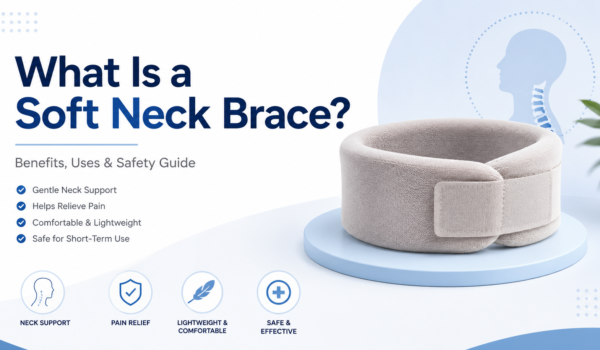
A foam collar offers light support and limited movement feedback. It does not immobilize the cervical spine like a rigid orthosis. To understand that role, see what a soft neck brace is.
Typical Wearing Patterns by Situation
The examples below explain how clinicians may think about timing. They are not personal prescriptions.
| Situation | General approach | Why medical guidance matters |
|---|---|---|
| Mild muscular discomfort | Brief or intermittent use, if recommended | Early comfortable movement is often preferred |
| Uncomplicated whiplash | Routine prolonged use is generally not supported | Fracture and neurologic injury must first be excluded |
| After cervical surgery | Follow the surgeon’s exact schedule | Procedure type and fixation determine restrictions |
| Diagnosed cervical injury | Follow the treating team’s instructions | A soft collar may not provide adequate stability |
| Chronic neck pain | Not usually a stand-alone long-term strategy | The cause and rehabilitation needs should be assessed |
Mild strain or temporary neck pain
For a minor, non-traumatic muscular problem, a clinician may suggest wearing a soft collar during a short period or a specific activity that aggravates symptoms. The aim is comfort while normal movement is gradually resumed—not continuous immobilization.
The NHS advises against routinely wearing a collar for ordinary neck pain because keeping the neck moving is usually better, unless a doctor gives different instructions.
Whiplash-associated neck pain
Older treatment plans often included days or weeks in a soft collar. Evidence has shifted toward early, tolerable activity for uncomplicated whiplash. A randomized trial comparing two days with ten days of soft-collar use found no short- or long-term advantage for the longer period in pain, range of motion, or disability.
Whiplash symptoms still require appropriate evaluation, particularly after a significant collision or when neurologic symptoms are present.
After surgery
Postoperative instructions vary by the operation, the surgeon’s technique, bone quality, fixation, and individual risk. Some patients are not prescribed a collar; others must wear one according to a detailed schedule. General blog guidance should never override discharge instructions.
If your written instructions and what you remember being told do not match, contact the surgical team rather than guessing.
A diagnosed cervical injury
A soft foam collar may be used in some healthcare systems for selected injuries or during evaluation, but it provides substantially less movement restriction than a rigid collar. Never substitute a store-bought soft brace for a prescribed device. If a collar was issued after trauma, keep following the treating team’s directions until they explicitly change them.
How Many Hours a Day Should You Wear It?
The answer should come from the purpose of the collar. “As needed” may mean a short interval during a particular activity—not all waking hours. “At all times” may include sleep and hygiene exceptions defined by the medical team.
Ask the prescriber four concrete questions:
- How many hours at a time should I wear it?
- During which activities should it be on or off?
- Should I sleep in it?
- When and how should I begin reducing use?
Written instructions are especially valuable because collar advice can be easy to misremember.
Should You Sleep in a Soft Neck Brace?
Do not automatically extend daytime use into the night. Sleeping in a collar may be required after a specific injury or operation, but it is not a routine treatment for every stiff or painful neck. Fit, breathing, swallowing, skin pressure, pillow height, and the underlying diagnosis all matter.
Our detailed guide, Can You Sleep With a Soft Neck Brace?, explains when nighttime use may be appropriate and how to reduce avoidable risks.
Signs You May Be Wearing It Too Long
Contact the recommending clinician if you notice:
- increasing stiffness when the collar comes off;
- growing dependence on the brace for ordinary movement;
- reduced confidence holding the head upright;
- new or worsening skin redness;
- pressure beneath the chin or along the jaw;
- headaches that appear or worsen with the collar; or
- discomfort when swallowing.
These signs do not prove permanent harm, but they suggest that the fit or schedule needs review. Learn more about soft neck brace side effects and safety risks.
When to Stop Immediately and Seek Medical Advice
Remove the collar if it is an optional, self-purchased device and it causes difficulty breathing or swallowing. Seek urgent medical care for new weakness, numbness, loss of coordination, trouble walking, severe or rapidly worsening pain, loss of bladder or bowel control, fever with marked neck stiffness, or symptoms after significant trauma.
If the collar was prescribed for a confirmed injury, contact the treating team urgently before changing the plan unless there is an immediate breathing emergency.
How Is a Soft Collar Usually Discontinued?
Someone who has used a collar only briefly may not need a formal transition. After longer clinician-directed use, the medical team may recommend gradually increasing time without it while normal movement and strength return. The schedule should reflect the condition, not a generic calendar.
Do not force stretches or test the neck aggressively when the collar comes off. Gentle, prescribed movement is different from pushing through sharp pain.
Frequently Asked Questions
Is it safe to wear a soft neck brace all day?
Only if a qualified clinician has given that instruction for your condition. Continuous self-directed use can promote stiffness and reduced muscle activity.
Can I wear a soft collar for a week?
That may be appropriate in some prescribed plans and unnecessary in others. Evidence in uncomplicated whiplash has not shown an advantage for ten days over two days, so duration should be individualized.
Should I take the collar off to exercise?
Follow the prescriber’s instructions. Some rehabilitation plans include specific collar-free exercises; other conditions require restrictions.
What if my pain returns when I remove it?
Pain returning does not automatically mean the neck is unsafe, but it deserves review if it is severe, worsening, or accompanied by neurologic symptoms. Ask whether the collar is masking a problem that needs a different treatment approach.
The Bottom Line
Most soft neck braces are designed for limited support, not indefinite daily wear. The correct duration can range from brief intermittent use to a specific clinician-directed schedule after surgery or injury. Use the diagnosis—not the discomfort alone—to guide timing, and avoid extending use simply because the collar feels reassuring.
References
- Dehner et al. Comparison of two versus ten days of soft-collar immobilization after acute whiplash injury.
- Gennis et al. Soft cervical collars and persistent pain after whiplash.
- NHS: Neck pain and stiff neck.
- American Academy of Orthopaedic Surgeons: Cervical spinal cord compression.
- Cervical collar use following cervical spine surgery: a systematic review.