
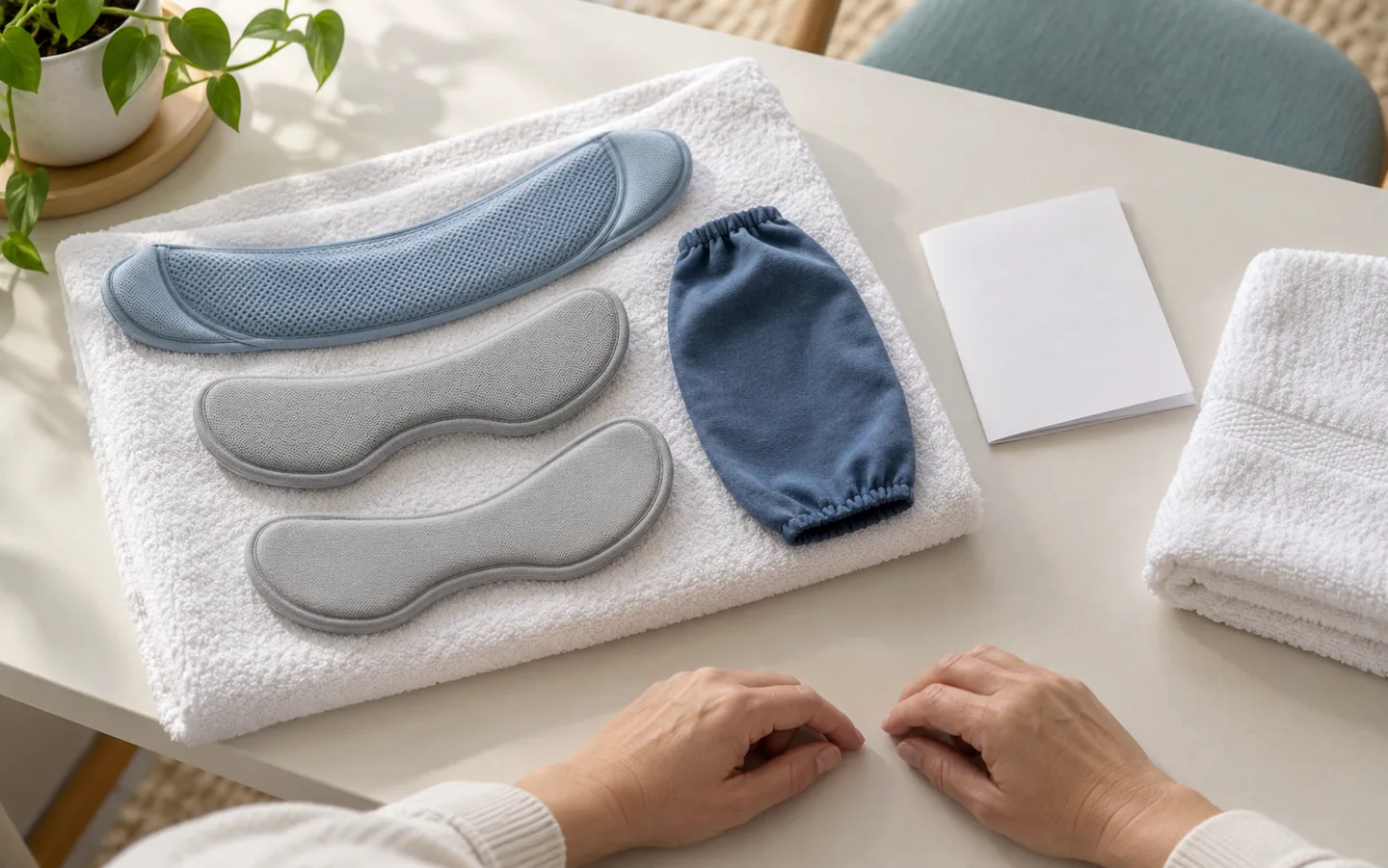
How to Clean a Cervical Collar Safely
To clean a cervical collar, follow the model’s instructions and your clinical removal plan. Many rigid collars allow the plastic shells to be wiped with mild soap and water, while removable pads are hand washed, rinsed, and air dried flat. Every part must be completely dry before it returns against the skin.
Do not remove a prescribed collar for cleaning unless you have been taught a safe method. Some injuries require you to lie flat and have another person maintain head position while pads are exchanged.
Quick Answer
Clean a cervical collar according to its model-specific instructions. In many rigid designs, wipe the plastic shells with mild soap and water, hand wash removable pads, rinse well, and air dry every part completely. Maintain the prescribed neck position and use a dry spare pad set when continuous wear is required.
Key Takeaways
- Confirm whether removal is allowed and whether a helper is required.
- Keep pad placement and collar height exactly as fitted.
- Never use damp pads, direct heat, bleach, or unapproved disinfectants.
- Inspect the skin, straps, pads, and shell during each cleaning session.
- Recheck how to fit a cervical collar correctly after pad replacement.
Why Cleaning Matters
Sweat, skin oil, food, cosmetics, and moisture collect beneath the collar. Damp or dirty pads increase friction, odor, and the risk of skin breakdown. Regular cleaning also creates an opportunity to inspect straps, plastic, padding, and skin.
Check the Instructions First
Collar designs vary. Some pads attach in a precise pattern; some shells contain adjustable components that should not be moved. Use the manufacturer leaflet and hospital instructions for your model.

Before starting, confirm:
- whether removal is allowed and in what position;
- whether another person must help;
- whether you have a clean spare pad set;
- which soap is approved; and
- how the pads align on the shell.
Take note of strap positions before undoing them.
What You Need
For many common rigid collars, suitable supplies include lukewarm water, mild soap, a clean cloth, clean towels, and a flat ventilated drying area. Avoid bleach, harsh detergent, solvents, alcohol, perfume sprays, fabric softener, and direct heat unless explicitly approved.
Step-by-Step Cleaning
1. Maintain the prescribed neck position
Sit or lie as instructed. Keep the head neutral. A helper may stabilize the head while removing the front and back panels.
2. Remove pads carefully
Peel pads from hook-and-loop attachment points one at a time. Observe their orientation and folds. Correct coverage prevents plastic from touching the skin.
3. Clean the plastic shells
Wipe or wash approved plastic surfaces with mild soap and water. Clean strap contact areas without changing height settings. Rinse or wipe away residue and towel dry completely.
4. Hand wash removable pads
Use mild soap and warm or lukewarm water. Gently work water through the material. Do not use bleach or harsh detergent.
5. Rinse thoroughly
Soap left in the pads can irritate skin. Rinse until the water is clear and the material no longer feels soapy.
6. Remove excess water
Press the pads in a clean towel according to product instructions. Avoid stretching or deforming them.
7. Air dry flat
Lay pads on a flat surface with good airflow. Do not use a tumble dryer, radiator, iron, or hair dryer. Direct heat can distort material and affect fit.
8. Reattach pads precisely
Use a clean, fully dry set. Align each pad as designed, smooth wrinkles, and cover all skin-facing plastic. Reassemble and refit the collar using the strap marks established during fitting.
How Often Should It Be Cleaned?
Frequency depends on wearing time, sweat, climate, and model guidance. Inspect the collar daily during prescribed skin care. Clean pads when soiled, damp, or odorous. Some NHS instructions recommend changing pads at least weekly and more often when physically soiled.
Continuous users often need two approved pad sets so one can dry while the other is worn.
Cleaning the Skin
Wash the neck gently, rinse, and dry thoroughly. Inspect beneath the jaw, behind the head, around the ears, and across the shoulders and chest. Avoid lotion, oil, and powder beneath the collar unless approved.
Contact the clinical team for persistent redness, blistering, open skin, drainage, swelling, or increasing pain.
What Not to Do
- Do not soak the whole device unless permitted.
- Do not machine wash plastic shells or pads by default.
- Do not wear damp pads.
- Do not apply heat to speed drying.
- Do not change height settings or strap length.
- Do not add unapproved liners or towels.
- Do not cut, file, glue, or repair cracked plastic yourself.
- Do not leave a required collar off while pads dry.
Inspect for Wear During Cleaning
Look for cracked or warped plastic, compressed pads, torn fabric, loose attachment points, and straps that no longer hold. A damaged collar may not maintain the prescribed position.
Contact the orthotics or surgical team for replacement parts. Do not substitute another model or a soft foam collar without approval.
Managing Odor
Persistent odor usually indicates trapped moisture, residue, or worn padding. Repeat the approved wash and allow complete drying. Do not mask odor with fragrance or disinfectant spray.
If odor remains or the pads have become stiff, discolored, or structurally damaged, request replacement pads.
Showering With a Collar
Instructions differ. Some patients wear the collar during a shower and exchange wet pads afterward. Others remove it while lying down with assistance. Use fall precautions because head movement and vision are restricted.
Never improvise. Ask for a written shower plan and keep dry replacement pads within reach.
When to Seek Help
Contact the issuing team if you cannot reassemble or refit the collar, a strap fails, the device changes shape, or skin problems develop. Urgent help is needed for breathing difficulty, new weakness or numbness, loss of balance, severe worsening pain, or sudden neck swelling.
Frequently Asked Questions
Can I use antibacterial wipes?
Only if the manufacturer approves them. Some chemicals can damage the shell or leave irritating residue.
Can the pads go in a washing machine?
Hand washing is recommended for many models. Use a machine only when the product instructions specifically allow it.
How long do pads take to dry?
Times vary from under an hour to several hours. Use a spare approved set rather than direct heat or damp pads.
Can I clean a soft collar the same way?
Not necessarily. Foam collars may be washable as a single piece and require different handling. See how to clean a soft neck brace.
The Bottom Line
Safe cervical-collar cleaning means preserving neck alignment, using mild approved products, washing pads gently, air drying everything completely, and reassembling the device exactly as fitted. Combine collar care with daily skin inspection and request professional help for damage or fit changes.
References
Related posts




NEW POSTS

November 1, 2026
CTO Brace: How It Differs From a Cervical Collar
October 31, 2026
Medicare Neck Brace Coverage: What to Check

October 31, 2026
Can You Work With a Cervical Collar?

October 30, 2026