
Can You Shower With a Cervical Collar?
You may be able to shower while wearing a cervical collar, but the answer depends on your device, your injury or operation, and the washing instructions from your clinical team. Some care plans allow showering with the collar on and a trained helper changing the wet pads afterward. Other plans prohibit showering in the collar.
Before your first shower at home, confirm which plan applies to you. Do not remove a prescribed collar, change its settings, or substitute a soft brace to make washing easier. A general article cannot tell you when your neck can safely be unsupported.
Why There Is No Single Showering Rule
“Cervical collar” covers different devices used for different reasons. A washable soft foam collar is not the same as a rigid shell with removable liners. Even patients wearing the same model may have different movement restrictions or need different amounts of assistance.
Published hospital instructions illustrate the variation. Cambridge University Hospitals describes showering in the prescribed hard collar with precautions, while Amsterdam UMC’s Miami J information allows a shower followed by a dry liner change. An Aneurin Bevan University Health Board leaflet tells its patients not to shower while wearing the collar. These instructions belong to specific care pathways; they are not interchangeable options to choose from.
If your paperwork is unclear, contact the ward, surgical team, fracture clinic, or orthotics service that supplied the device. Ask for a written washing plan and a demonstration of any collar care you are expected to perform.
Soft and Rigid Collars Need Different Questions
| Device or situation | What to confirm before washing |
|---|---|
| Soft foam collar | Whether it may be removed, whether the whole product is washable, and how it must dry. |
| Rigid collar with removable pads | Whether showering is allowed, who changes the pads, and how neck position is maintained. |
| Recent neck surgery | Separate instructions for the incision, dressing, collar, and assistance. |
| No dry spare pads or no trained helper | What approved alternative washing arrangement to use until supplies or help are available. |
If a soft collar was prescribed, its flexibility does not give you permission to leave it off. If it was bought without a prescription, do not assume you need to wear it in water. Clarify why you are using it. Our guide to soft and hard collar differences explains why they cannot simply replace each other.
Get These Details Before Turning on the Water
The most useful preparation is a short list of clear answers, not a collection of online demonstrations. Videos may show a different model or a removal method that is inappropriate for your injury.

- Am I allowed to shower now, and must the collar stay on throughout?
- Do I need someone present, and have they been shown the required technique?
- If pads become wet, who may change them and in which position?
- Which replacement pads are approved for my exact model?
- How should I wash my hair without exceeding my movement restrictions?
- Are there separate instructions for a surgical wound or dressing?
- Whom should I contact if something goes wrong outside clinic hours?
Keep these answers with your discharge information. “You can wash” may mean an assisted wash at a sink rather than a standing shower. Ask the team to describe the arrangement they intend, especially if your bathroom setup makes it difficult.
Prepare the Bathroom Around Your Care Plan
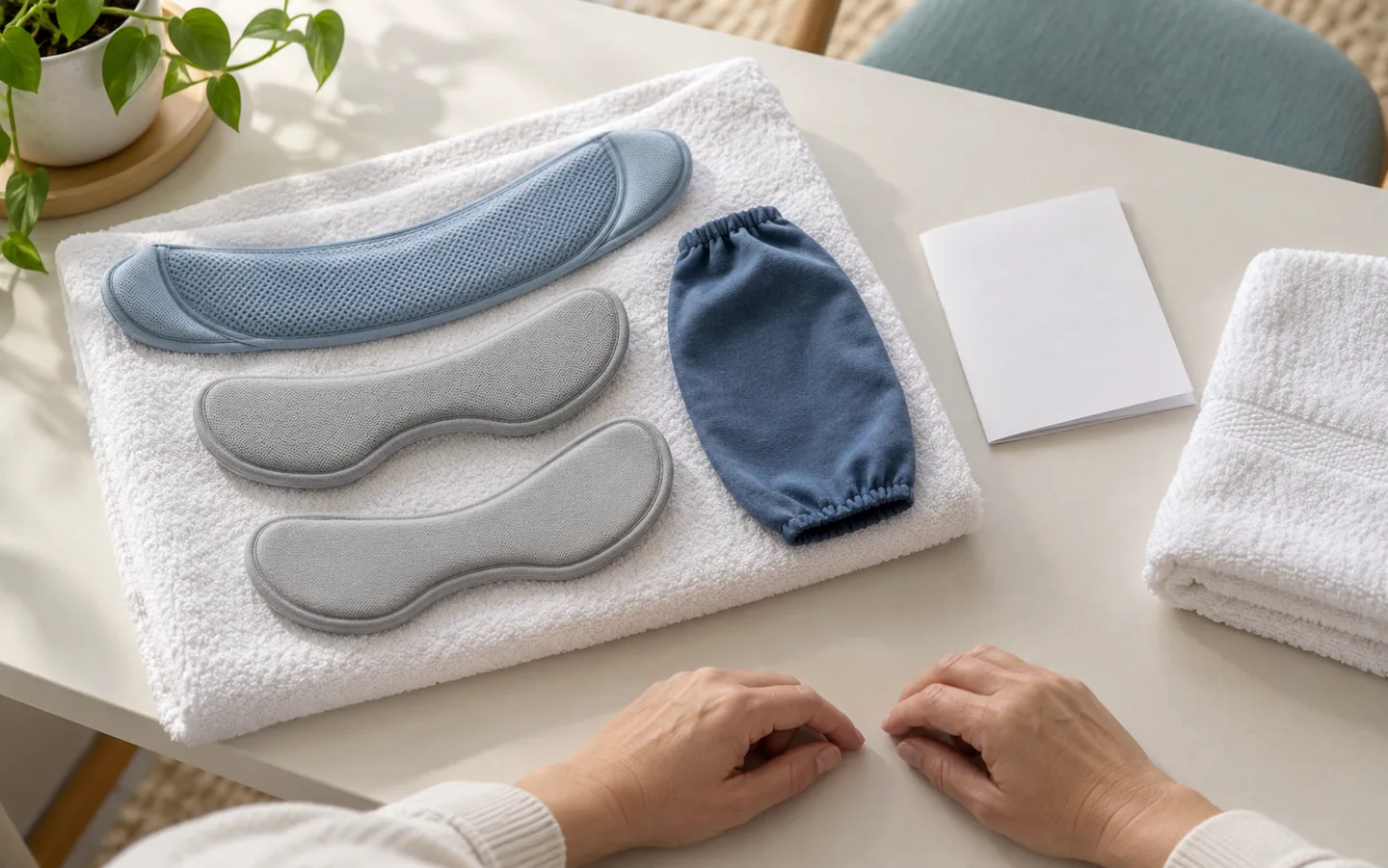
If showering is permitted, arrange supplies before getting started. Keep the approved dry pad set, clean towels, and the contact number for your care team accessible. Decide where your helper will stand and where the pad change will happen, following the method you were taught.
A collar can limit the view of your feet and restrict head movement. Cambridge University Hospitals suggests discussing precautions such as a shower chair, an anti-slip setup, and another person nearby. Which equipment is appropriate depends on your balance, mobility, and bathroom. A chair is useful only if you can use it safely.
Do not improvise a way to climb into a tub, lean backward over a basin, or reach awkwardly for shampoo. Tell the team if you cannot manage the proposed setup. An approved alternative wash is preferable to trying an unfamiliar maneuver because you want to finish quickly.
A Cover Does Not Make the Collar Waterproof
Some hospital leaflets mention a thin protective covering to reduce splashes. That does not establish that your collar is waterproof or that its pads will stay dry. Ask whether a cover is appropriate for your setup, and follow the team’s directions rather than sealing or modifying the device yourself.
The same caution applies to a second “shower collar.” Only use one if it was supplied or explicitly approved as part of your treatment, with instructions for changing between devices. A cheap foam collar is not an equivalent replacement for prescribed rigid support.
What If the Pads Get Wet?
Wet padding against the skin needs attention. Leeds Teaching Hospitals advises its collar patients to change wet pads for dry ones to reduce skin soreness. The important question is how that exchange can be performed within your restrictions.
Use the removal and pad-change method taught for your exact collar. Do not undo it and then work out what to do next. If you were not taught to change pads, have no approved dry set, or cannot obtain the required help, contact the supplying service for instructions.
Do not leave a required collar off while waiting for padding to dry. Follow the manufacturer guidance for drying; do not assume a hair dryer or radiator is an acceptable shortcut. Our cervical-collar cleaning guide addresses device washing separately from bathing your body.
Hair Washing and Surgical Wounds
Hair washing can involve head positions you are not allowed to use. Ask whether you need assistance or a different arrangement during this stage of recovery. Do not tip the head backward or forward simply because a salon-style technique appears convenient.
If you have an incision, follow its separate care instructions. Permission to get a collar wet does not mean a dressing may be soaked. Conversely, permission to wash an incision does not establish permission to remove the collar. Keep those two decisions explicit. Our guide to collars after surgery explains other questions to clarify before discharge.
When to Stop and Get Help
Contact your clinical team if the collar no longer sits as fitted, a strap or shell is damaged, pads cannot be attached correctly, or the skin develops persistent redness, discoloration, broken areas, or increasing pain. Avoid hiding a sore area with homemade padding, which can change the fit.
New trouble breathing or swallowing, new limb weakness or numbness, or sudden severe worsening symptoms need urgent assessment. A fall or abrupt neck movement during bathing also deserves prompt advice, particularly when the collar protects an injury. Use your discharge escalation instructions; seek emergency help for severe symptoms. See cervical collar side effects for further warning signs.
Common Questions
Can I take the collar off just to wash my neck?
Only under the removal instructions given for your treatment. Some people require a trained helper and a particular position. Do not copy another patient’s technique, even if the collars look alike.
Can I shower alone?
Ask your treating team. Independence depends on more than the collar: balance, access, the required pad-change method, and movement restrictions all matter. If assistance was prescribed, arrange it before washing.
Is a bath always easier than a shower?
No single option is suitable for everyone. Getting into and out of a tub can create its own problems. Ask about an arrangement you can manage safely in your actual bathroom rather than treating a general suggestion as permission.
What should I do if two leaflets disagree?
Contact your own team and identify the exact model and conflicting instructions. Until the plan is clarified, do not use another hospital’s showering advice to override your discharge restrictions.
Sources
Related posts




NEW POSTS

November 1, 2026
CTO Brace: How It Differs From a Cervical Collar
October 31, 2026
Medicare Neck Brace Coverage: What to Check

October 31, 2026
Can You Work With a Cervical Collar?

October 30, 2026