

Can Stress Cause Neck Pain? What to Notice
Yes, stress can contribute to neck pain. During a demanding day, some people tighten their shoulders, hold the head still, sleep poorly, or notice pain more intensely. These responses may add to an existing neck problem. But stress is one possible contributor, not a diagnosis and not proof that the pain is “all in your head.”
The practical approach is to look for a pattern, reduce avoidable strain, and address both discomfort and stress. At the same time, new weakness, numbness, pain after trauma, fever, or a severe unusual headache should be assessed on their own terms—not explained away as anxiety.
How Stress and Neck Pain May Connect
Muscles around the neck and shoulders are active through much of the day. Under stress, you may hold them more tightly, breathe more shallowly, or remain fixed at a screen. Hull University Teaching Hospitals notes that stress and anxiety can increase muscle tension and contribute to neck pain or tension headaches. The experience is physical even when emotional strain is part of the story.
Sleep is another route. A busy mind may make it harder to fall asleep or return to sleep after waking; poor sleep can make pain harder to cope with the next day. A systematic review of longitudinal studies found an association between sleep problems and later chronic musculoskeletal pain, while noting uncertainty about the exact two-way relationship. It cannot tell whether stress caused any individual person’s neck pain.
The relationship can become a loop: discomfort makes you worry, worry leads to tense muscles or poor sleep, and the next day the neck feels less tolerant of ordinary tasks. Breaking one part of that loop may help even if there is no single cause.
Clues That Stress Is Part of Your Pattern
Ask yourself whether neck and shoulder tightness rises on deadline days, during difficult conversations, after long periods of screen concentration, or when sleep is poor. Does a walk, a calmer day, or an enjoyable activity make it easier? These clues are useful but not definitive. A flare that coincides with stress may also involve a demanding workstation, strenuous exercise, or an unrelated condition.
Notice where the pain goes. A broad ache across the shoulders may feel different from pain that shoots down an arm with numbness or weakness. Write down timing, activities, sleep, and symptoms for a few days. The record can help you and a clinician see patterns without assigning blame.
What Can You Do Today?
Let the shoulders move
Pause during a task and notice whether your shoulders are lifted or your jaw is clenched. Exhale, let the arms rest, and change position. Take a short walk or move through comfortable shoulder and neck motion. The aim is not to hold perfect posture afterward; it is to interrupt a long period of bracing.
Make the task less demanding
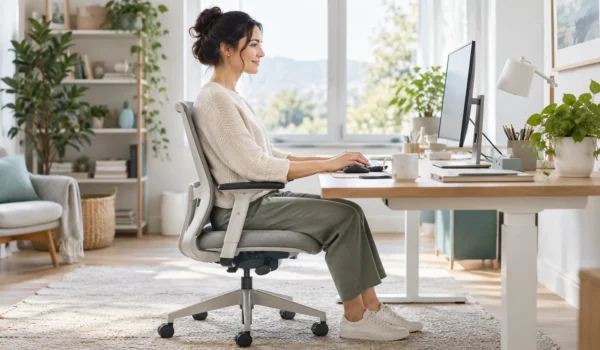
If every stressful workday also means hours leaning toward a laptop, adjust the screen or text size, move the keyboard within easy reach, and plan brief movement breaks. You may need both better task design and stress management. Our article on whether a soft neck brace helps neck pain explains why support alone does not address these drivers.
Try a brief relaxation practice
Slow breathing, guided imagery, or progressive muscle relaxation may help some people settle tension. The NIH National Center for Complementary and Integrative Health describes these approaches and notes that evidence for pain relief varies by condition and study quality. Try a method that feels comfortable; it is not a guaranteed treatment for neck pain. If a technique increases anxiety or distress, stop and choose another approach.
Protect sleep and routine activity
Keep a reasonably consistent sleep schedule and a comfortable pillow setup. Continue ordinary movement as tolerated rather than staying in bed because you feel tense. MedlinePlus neck self-care guidance recommends remaining active within comfort. If work or family demands are overwhelming, support from a trusted person or a mental health professional may be as relevant as another neck remedy.
What Stress Relief Cannot Do
It cannot rule out a pinched nerve, infection, inflammatory disease, or injury. It cannot guarantee pain will disappear. It also should not become a new source of pressure: failing to relax “correctly” does not mean you caused your symptoms. The NCCIH stress guidance cautions against using relaxation techniques to postpone medical care for a health problem.
A soft collar may feel comforting for a short period, but it is not a stress treatment. Wearing one every day to feel protected can also reduce normal movement or create pressure. Read about the limited benefits of a soft brace and its possible side effects before treating it as an everyday coping tool.
When to Ask for Help
Arrange a clinical appointment if pain is persistent, increasingly limits sleep or work, travels into an arm, or is accompanied by numbness or tingling. Seek urgent care for new or progressive weakness, trouble walking, bowel or bladder changes, a significant injury, or fever with a severe headache and markedly stiff neck. MedlinePlus lists these neck-pain warning signs.
If stress, anxiety, or low mood is itself hard to manage, ask a healthcare professional about support. NIMH describes self-care as a support, not a substitute for professional help when symptoms are severe or persistent. Addressing mental health and checking physical symptoms can happen together.
Frequently Asked Questions
Can stress cause a stiff neck overnight?
Stress-related tension and poor sleep may contribute, but waking stiff can also reflect sleep position or another issue. A new, severe, or recurrent pattern deserves assessment.
Does stress-related pain mean there is no physical problem?
No. Muscle tension and pain are real physical experiences. Stress may be one factor while other mechanical or medical factors also exist.
Will meditation fix neck pain?
Not reliably. A relaxation practice may help some people manage stress and discomfort, but evidence varies. Combine it with comfortable activity, a sensible work setup, and clinical care when needed.
The Bottom Line
Stress can amplify neck muscle tension, disrupt sleep, and make discomfort harder to manage. Look for patterns and use small, repeatable changes, but never use stress as a reason to ignore new, severe, or neurologic symptoms.
Sources
Related posts



NEW POSTS

November 1, 2026
CTO Brace: How It Differs From a Cervical Collar
October 31, 2026
Medicare Neck Brace Coverage: What to Check

October 31, 2026
Can You Work With a Cervical Collar?

October 30, 2026