Soft Neck Brace Side Effects and Safety Risks
- A soft neck brace may look harmless, but it can cause problems when it fits poorly, is worn for too long, or is used for the wrong condition. The most common issues are skin irritation, pressure beneath the chin, uncomfortable swallowing, increased stiffness, and reduced normal neck-muscle activity. A soft collar can also create a false sense of protection even though it does not reliably immobilize the cervical spine.Most problems are preventable. The key is to use the brace for a clear reason, follow a limited schedule unless a clinician says otherwise, check the skin, and recognize symptoms that require medical assessment.
Is a Soft Neck Brace Generally Safe?
For many adults, short-term use of a correctly fitted soft collar is well tolerated. A hospital study of 136 patients managed with soft collars for acute cervical injury reported no collar-related adverse events, and interviewed patients generally found them supportive and tolerable.
That finding does not make every use safe. Hospital patients are assessed and monitored, while a person purchasing a collar online may not know the cause of the pain or the correct size. Safety depends on diagnosis, fit, duration, skin condition, and whether the collar interferes with breathing, swallowing, or movement.
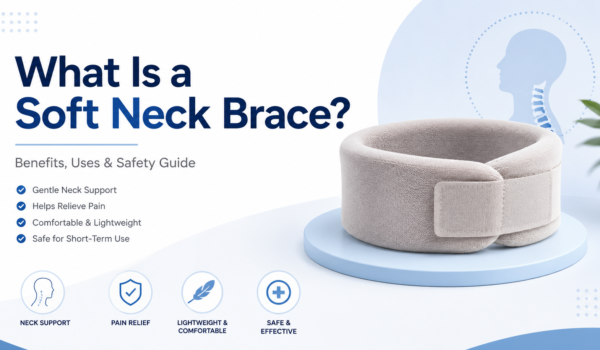
For a basic explanation of the device, read What Is a Soft Neck Brace?
Common Soft Neck Brace Side Effects
Skin irritation and moisture buildup
Fabric and foam hold heat close to the neck. Sweat, skin oil, friction, and detergent residue can cause itching, redness, or a rash. Risk increases in warm weather, during exercise, and when the collar is not cleaned or dried properly.
Inspect the skin at least daily if you wear the collar regularly. Persistent redness, broken skin, drainage, blistering, or increasing tenderness needs attention. People with diabetes, reduced sensation, fragile skin, or poor circulation should be especially cautious.
Pressure under the chin or around the jaw
A collar that is too tall may push the chin upward or concentrate pressure along the jaw. One that is fastened too tightly can leave marks and feel constricting. The brace should make gentle, broad contact rather than digging into one point.
Pressure can also come from worn-out foam. Once the collar collapses or develops uneven edges, replacing it may be safer than tightening it to regain support.
Difficulty swallowing
An overly tight or incorrectly positioned collar can make swallowing feel awkward. Mild awareness of the collar is different from choking, coughing with meals, or being unable to swallow comfortably.
Loosen or remove a self-purchased collar if it interferes with swallowing. If a prescribed collar must remain on for a confirmed injury, contact the treating team promptly for fitting advice rather than adjusting it repeatedly on your own.
Restricted head movement
Even a soft collar can make it harder to turn far enough to check traffic, look behind you, or react naturally. Do not drive, cycle, operate machinery, or perform tasks requiring a full field of view while the collar restricts comfortable movement.
Stiffness
Reduced movement may make the neck feel stiffer when the brace comes off. This can happen even though soft collars do not fully immobilize the neck. Stiffness is more likely when the device is worn continuously and normal, tolerable movement is avoided.
Reduced muscle activity
The collar’s resting effect can become a drawback with prolonged use. When the brace consistently assists the neck, the muscles may do less stabilizing work. The American Academy of Orthopaedic Surgeons cautions that long-term soft-collar use may decrease neck-muscle strength.
This concern is one reason there is no benefit in wearing a collar “just in case” for weeks. See how long a soft neck brace should be worn.
Headache or jaw discomfort
An incorrect height can alter the position of the head and jaw. Some people develop pressure headaches, jaw soreness, or discomfort near the ears. These symptoms often signal a sizing or positioning problem rather than something to tolerate.
A false sense of security
Perhaps the most important risk is behavioral. Because the neck feels supported, a person may return to lifting, sports, or other painful activities too soon. Soft collars have a poor ability to restrict cervical motion and should not be treated as protection for a suspected fracture, instability, or serious trauma.
Risks of Wearing a Soft Collar Too Long
Prolonged wear may create a cycle: the collar reduces movement, the neck becomes stiffer or less confident without it, and the person wears the collar even more. The exact threshold varies, but continuous use without a diagnosis or review is a warning sign.
Potential problem What may contribute Practical response Skin redness Heat, moisture, friction, tight fit Clean and dry the collar; check fit and skin Chin or jaw pressure Incorrect collar height Recheck sizing; do not overtighten Stiffness Continuous reduced movement Ask about a movement or weaning plan Weakness/deconditioning Prolonged reliance Use only for the advised duration Unsafe activity False sense of protection Do not use the collar to justify risky movement Swallowing discomfort Excessive tightness or poor position Remove an optional collar; seek fitting advice Who Needs Extra Caution?
Speak with a healthcare professional before self-treating with a collar if you have:
- a recent fall, collision, or significant blow;
- osteoporosis or a known cervical-spine disorder;
- numbness, weakness, balance changes, or pain traveling into an arm;
- diabetes, fragile skin, reduced sensation, or a history of pressure injuries;
- breathing or swallowing problems;
- a recent neck operation; or
- a collar prescribed as part of trauma care.
Children should not be placed in an adult soft collar without professional sizing and instructions.
Warning Signs That Need Prompt Care
Seek urgent medical attention for new arm or leg weakness, numbness that is spreading, loss of coordination, difficulty walking, loss of bladder or bowel control, severe headache after trauma, fever with pronounced neck stiffness, or breathing difficulty.
Also seek help when neck pain is severe, rapidly worsening, or follows a substantial accident. A soft collar can reduce the sensation of movement without making an unstable injury safe.
How to Reduce Side Effects
Choose the correct height
The collar should support the chin while the head remains neutral. It should not push the head backward or allow the chin to disappear into the foam.
Avoid overtightening
Fasten it snugly enough that it stays in position, but not so tightly that it affects breathing or swallowing. Follow the product instructions or a clinician’s fitting demonstration rather than relying on a generic “finger test” alone.
Keep it clean and dry
Follow the manufacturer’s washing instructions. Let the foam and cover dry completely before wearing them again. A damp collar increases friction and skin irritation.
Check the skin
Look beneath the chin, along the jaw, at the back of the neck, and near the closure. Do not ignore redness that remains after the collar is removed.
Use the shortest appropriate schedule
More time is not automatically more therapeutic. If you are wearing the brace without a prescription, arrange an assessment when symptoms persist, recur, or require repeated collar use.
Combine support with the actual treatment plan
Depending on the diagnosis, recovery may involve education, gradual activity, ergonomic changes, physical therapy, medication, or further investigation. A collar should support that plan rather than become the plan.
Frequently Asked Questions
Can a soft neck brace make pain worse?
Yes. Poor fit can change head position or create pressure, while prolonged reduced movement may increase stiffness. Worsening or spreading pain needs review.
Can wearing a collar weaken neck muscles?
Long-term wear may reduce normal muscle activity and strength. Short, clinician-directed use is less likely to cause meaningful deconditioning.
Why does my throat feel tight in a neck brace?
The collar may be too tight, too tall, or incorrectly positioned. Remove an optional collar and reassess the fit. Breathing or significant swallowing difficulty requires prompt medical care.
Is skin redness normal?
Brief light marks may occur, but persistent redness, broken skin, blisters, or increasing pain are not signs to ignore.
The Bottom Line
Soft neck brace side effects are usually related to fit, heat and moisture, limited movement, or wearing the device longer than needed. A correctly fitted collar used for a clear, short-term purpose may be comfortable, but it is not risk-free and does not protect an unstable cervical injury. Stop treating the collar as harmless if it causes pressure, swallowing problems, worsening symptoms, or dependence.
References
- Houghton et al. Soft collar for acute cervical spine injury immobilisation: patient experiences and outcomes.
- Bäcker et al. Cervical immobilization in trauma patients: systematic review and meta-analysis.
- A systematic review of the ability of external immobilizers to restrict cervical movement.
- American Academy of Orthopaedic Surgeons: Cervical spinal cord compression.
- Leeds Teaching Hospitals: Cervical neck collars.