

Neck Brace Buying Guide: Fit Before Features
Quick answer: Do not start with a “best neck brace” list. First establish whether a brace is appropriate for your condition, whether you need soft comfort support or a prescribed rigid orthosis, and how it should fit. Then compare verified details such as neck-height range, circumference sizing, pad care, and replacement-part availability. A product description cannot diagnose an injury or replace a clinician’s fitting.
Neck braces look similar in search results, but they are not interchangeable. A foam collar may be sold directly to consumers; a rigid collar may be selected after a specific injury or operation. More structure is not automatically better. This guide gives you a way to compare product information without pretending we tested devices, ranked outcomes, or know which model is right for you.
Step 1: Decide whether shopping is the right next step
For ordinary neck pain, the NHS recommends keeping the neck moving and says not to wear a collar unless a doctor advises it. The NHS also says routine neck braces do not help typical whiplash recovery. A clinician may still recommend a collar for a particular diagnosis. Mayo Clinic describes short-term soft-collar use as one possible option in selected cases, while warning that prolonged use can make symptoms worse.
If pain followed a significant crash or fall, or you have new weakness, numbness, walking problems, or severe worsening pain, seek medical evaluation instead of ordering a support online. A soft collar does not stabilize a suspected fracture. If you already have a prescribed rigid collar, the product and wear schedule should come from your treating team. Our guide to when a neck brace may be appropriate explains that decision in more detail.
Step 2: Match the device category to the clinical goal
| Category | What to verify | What not to assume |
|---|---|---|
| Soft foam collar | Height, neck circumference, cover, closure | That it immobilizes the spine |
| Rigid cervical collar | Exact prescription, clinician fit, pad system, wear instructions | That any similar-looking model can replace it |
| Cervical-thoracic orthosis | Specialist fitting and upper-torso support plan | That it is simply a taller collar |
| Pillow or travel cushion | Sleeping position, height, material care | That it is a neck brace or fracture treatment |
If the recommendation merely says “neck brace,” ask which type is intended and why. A clinician should specify whether the goal is short-term comfort or meaningful movement restriction. Our neck-brace-types guide distinguishes the categories.
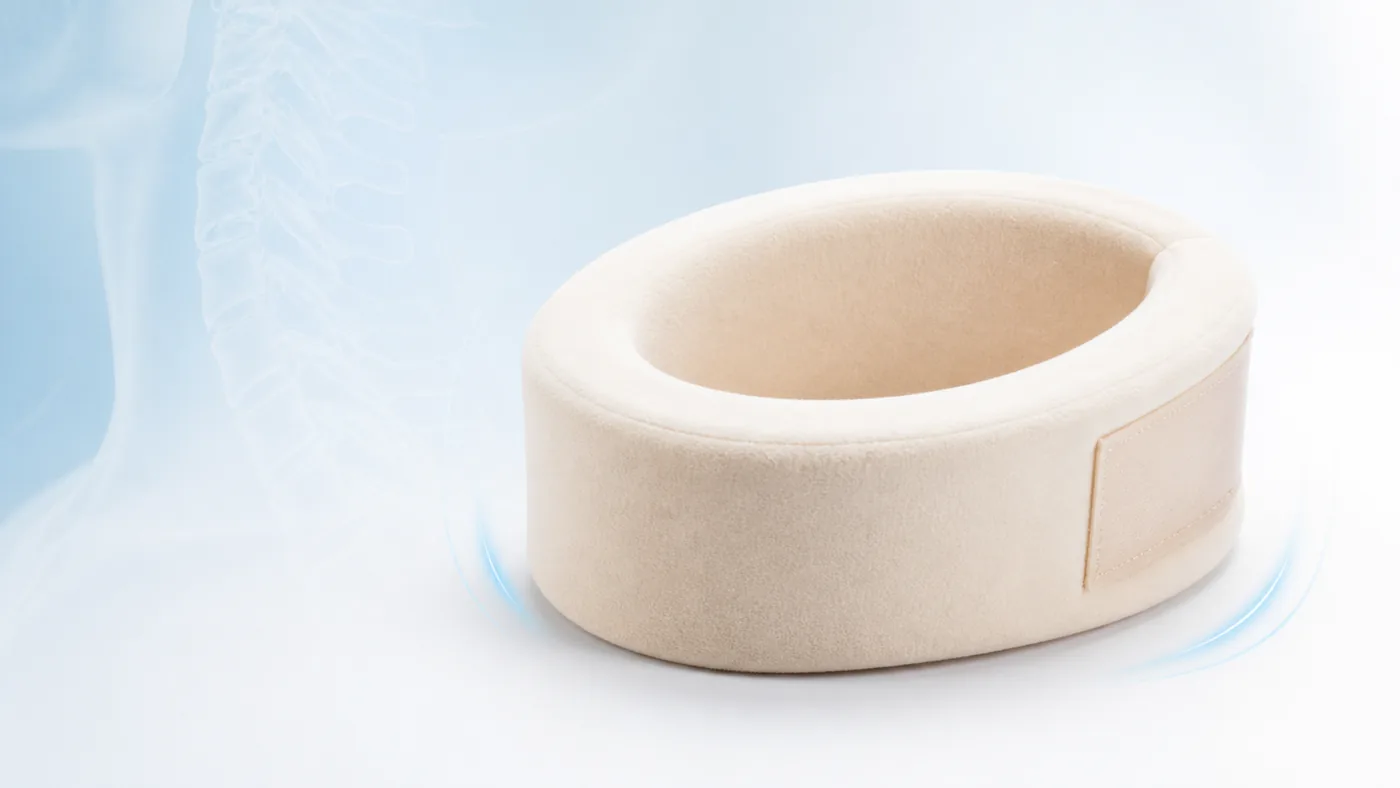
Step 3: Read the size chart—not just “universal”
Soft collars vary in height as well as circumference. Height determines where the foam rests between the jaw and upper chest; circumference determines whether the closure can secure it without squeezing. For example, Thuasne’s C1 Classic listing offers four heights and four numbered circumference sizes, while Breg’s Soft Collar Universal offers several heights plus a width extender. Those are manufacturer specifications, not evidence that one fits every person.
Before purchasing, measure as the manufacturer instructs, then check the return or exchange policy. Do not guess a size based on shirt size. A collar that forces the chin upward, lets it drop, or rubs at the jaw may be poorly matched. If a clinician recommended the device, ask them to check the selected height and fit.
“Adjustable” has limits too. Aspen’s Vista rigid collar, for instance, has six height settings, and Breg lists six settings for its Carlsbad collar. Those adjustments can help a trained fitter find a position; they do not make self-fitting a prescribed injury brace safe. The underlying injury and exact device choice still require clinical direction.
Step 4: Check materials, pads, and cleaning
Collars touch warm, mobile skin. A removable, washable cover may make soft-collar care easier. Thuasne describes the C1 Classic as foam with a removable washable cover; Breg describes a removable washable stockinette on its Soft Collar Universal. For rigid collars, check whether replacement pads are available and how they must be cleaned and dried. Aspen’s Vista patient instructions, for example, specify hand washing pads and air drying rather than machine drying.
Do not use these features as a shortcut to a medical claim. “Breathable,” “moisture wicking,” and “pressure distributing” are product descriptions. No material guarantees that a collar will prevent skin damage. Guy’s and St Thomas’ NHS Foundation Trust advises skin checks and contacting orthotics for persistent redness, blisters, breaks in the skin, pain, or increasing rubbing.
Factual model examples—not recommendations
These examples show which specifications a manufacturer publishes. They are not rankings, endorsements, hands-on reviews, or a suggestion to substitute one for a prescribed device. Model information was checked September 20, 2026; availability and specifications can change. Verify the exact version on the linked manufacturer page before buying. For more models and side-by-side fields, use our source-linked collar comparison—also a feature research tool, not a recommendation.
| Manufacturer model | Category | Verified description from manufacturer |
|---|---|---|
| Breg Soft Collar Universal | Soft | Medium-density foam, removable washable stockinette, several heights, width extender. |
| Thuasne C1 Classic | Soft | Foam support, removable washable cover, hook-and-loop adjustment. |
| Aspen Vista Cervical Collar | Rigid | Six height settings and replaceable cotton-lined pads; manufacturer directs patients to discuss suitability with a doctor. |
| Breg Carlsbad Cervical Collar | Semi-rigid | Dual height adjustment with six settings, front access opening, and breathable liner. |
| Össur Miami J Select | Rigid | Manufacturer patient guide describes a sternal comfort dial and removable, hand-washable pads; use is directed by a clinician. |
Manufacturer “indications” and marketing language are not independent proof of clinical benefit. We have not compared motion restriction, comfort, or outcomes in real patients. If a brand sells a similar item under a different name in your country, verify the exact SKU and instructions rather than assuming equivalence.
Step 5: Ask about fit, wear time, and daily life
The comparison tool covers model specifications and seller checks; these are different questions for your treating team. Before using a recommended brace, get written answers to five questions:
- What condition is it treating, and which movement should it limit?
- Who will check fit after it is applied?
- When must it be worn—including sleep—and when may it be removed?
- How should skin, cover, pads, and fasteners be checked and cleaned?
- What symptoms require a call, and when will the need for the brace be reviewed?
For a prescribed hard collar, ask about bathing, driving, work, and help with pad changes. Cambridge University Hospitals describes these as injury-specific instructions. Do not trim plastic, add thick homemade padding, or swap a different model for comfort without approval.
Where do neck pillows fit?
A cervical pillow is a sleep accessory, not an immobilizing neck brace. Pillow makers publish useful fit details—Tempur-Pedic offers small, medium, and large TEMPUR-Neck profiles; Core Products lists petite, midsize, and full Tri-Core sizes. These specifications may help a shopper compare height and cleaning instructions, but they do not prove a pillow will treat neck pain. For ordinary nighttime discomfort, start with our sleeping-position guide.
Red flags and the final check
Seek urgent help after significant trauma or with new neurological symptoms, breathing trouble, or fever with a severe headache and stiff neck. Do not let an online purchase delay assessment. If you have already been fitted with a brace, new skin breakdown, altered fit, or worsening symptoms deserve prompt contact with the issuing team.
The best purchasing decision may be not buying a brace. If one is appropriate, compare purpose, size, fit support, care requirements, and a clear review plan before brand or price. That is more honest—and more useful—than a generic top-ten list.
This guide is educational. It contains no first-hand product testing or individual medical recommendation. Its manufacturer links are not affiliate links or paid placements. Any future commercial relationship affecting a listing will be disclosed beside it.
Sources
- NHS: Neck pain and whiplash
- Mayo Clinic: Neck pain diagnosis and treatment
- Cambridge University Hospitals NHS Trust: Hard-collar care
- Guy’s and St Thomas’ NHS Foundation Trust: Collar fit and skin checks
- Aspen Vista product and patient pad-care instructions
- Össur Miami J Select patient guide
- Breg Soft Collar Universal and Carlsbad Cervical Collar
- Thuasne C1 Classic
- Tempur-Pedic TEMPUR-Neck Pillow and Core Products Tri-Core Pillow
Related posts



NEW POSTS

November 1, 2026
CTO Brace: How It Differs From a Cervical Collar
October 31, 2026
Medicare Neck Brace Coverage: What to Check

October 31, 2026
Can You Work With a Cervical Collar?

October 30, 2026