
Neck Brace Types: A Practical Comparison
Quick answer: Neck braces range from soft foam collars used for limited short-term support to clinician-fitted rigid collars, braces extending onto the upper body, and specialist halo systems. They differ in how much motion they restrict, how they are fitted, and why they are prescribed. None should be treated as a universal answer to neck pain.
If you search for “neck brace,” you will see products that look similar but serve entirely different purposes. A foam band sold for comfort cannot protect a suspected neck fracture. A surgical brace may be essential for one patient but inappropriate for someone with everyday muscle soreness. Rather than asking which brace is strongest, start with the reason support is being considered.
A useful way to classify neck braces
Think about three questions: What area does it support? How much movement does it limit? Who decides the wear schedule? A soft collar surrounds the neck and reminds you to avoid certain movements. A rigid cervical collar has shaped panels that limit more motion. A cervical-thoracic orthosis, or CTO, connects neck support to the upper torso. A halo vest is fixed to the head and managed by a specialist team.
| Device | Where support reaches | Typical fitting | What it cannot do |
|---|---|---|---|
| Soft foam collar | Around the neck | Sized or advised for an individual | Securely stabilize a cervical fracture |
| Rigid cervical collar | Chin, back of head, and neck | Clinician or orthotist fitting | Remove all neck movement |
| CTO | Neck plus chest/upper back | Specialist fitting | Replace a different prescribed brace without review |
| Halo vest | Skull ring connected to torso vest | Medical procedure and follow-up | Serve as a consumer pain-relief product |
This framework is more helpful than advertisements claiming a brace is “maximum support.” Maximum support is not always the desired treatment. Comfort, healing protection, and movement restriction are different goals.
Soft foam braces: a limited role
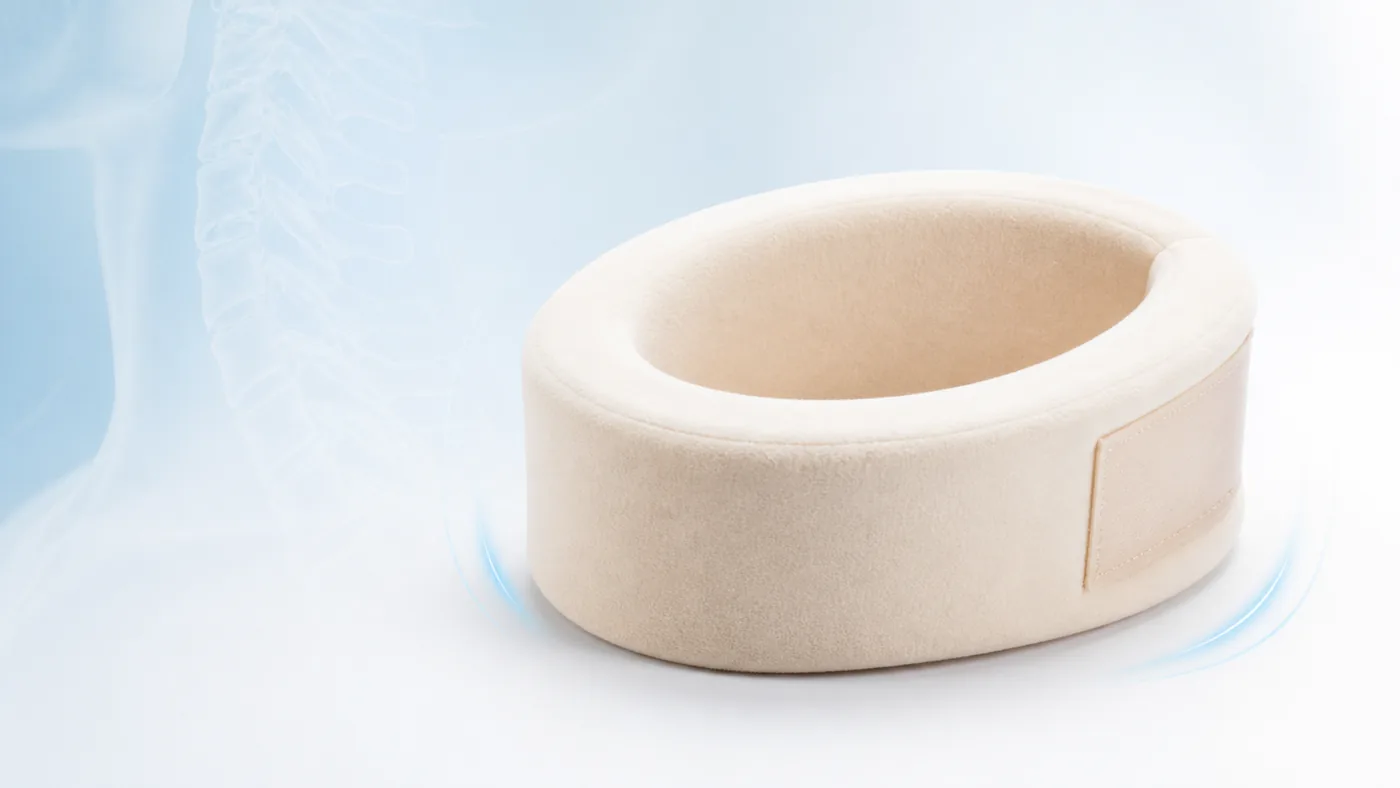
The familiar soft collar is a padded ring, usually secured with a hook-and-loop strap. It can make some people more aware of neck movement and may briefly reduce discomfort when a healthcare professional recommends it. It does not provide rigid immobilization. Mayo Clinic notes that prolonged soft-collar use may worsen symptoms, and the NHS generally recommends keeping the neck moving for ordinary neck pain unless a clinician says otherwise.
That is especially relevant for whiplash. The NHS says collars do not help routine whiplash recovery and advises continued everyday activity as tolerated. The right care after trauma still starts with assessment; this guidance does not mean every collision is harmless. It means that buying a brace for every whiplash-like pain episode is not evidence-based.
The soft neck brace overview explains its construction; the soft-versus-hard collar comparison discusses the contrast in more detail.
Rigid collars: a prescribed treatment tool
Rigid collars commonly use plastic front and back sections, replaceable pads, and adjustable fasteners. Clinicians may use them for specific diagnosed injuries or after certain cervical operations. They support alignment and reduce movement while healing takes place. They are not suitable for self-treating a possible fracture because the condition, fit, and follow-up must be established first.
Rigid does not mean motionless. Hull University Teaching Hospitals explains that a hard collar limits movement but does not eliminate it completely. A poorly fitted collar can rub the skin or fail to give intended support. Many prescribed-collar plans include skin checks, cleaning procedures, and instructions for safe removal—sometimes with a helper and a specified position. Those details vary by injury and should be demonstrated before discharge.
Braces extending below the neck
A CTO adds chest and upper-back support to a cervical component. It may be chosen when the treatment plan calls for limiting motion across both the neck and upper spine. This brace is not an everyday posture gadget. An NHS orthotics page emphasizes that diagnosis and injury severity determine wear duration, and that the device needs specific application and removal instructions.
Some larger spinal braces include neck, chest, and even lower-back sections. A patient may hear terms such as CTLSO. These are specialist designs for an individual spinal condition, not merely bigger versions of a soft neck collar. If a prescription lists an abbreviation you do not recognize, ask the treating team to write down the full name and show the exact device.
Halo vests: a separate specialist category
A halo vest uses a ring attached to the skull and rods connected to a stiff vest. It restricts neck motion while selected bone and ligament injuries heal. MedlinePlus explains that a healthcare team applies, adjusts, monitors, and removes the device. Care involves checking pin sites, pressure areas, and new neurological symptoms.
It is useful to know this category exists because search results sometimes group all devices under “neck brace.” In practice, a halo is not purchased and applied like a retail collar. Its risks, maintenance, and follow-up are entirely different.
How to compare a brace you have been prescribed
Once a clinician has selected a device class, the next issue is fit—not a generic ranking. Ask whether the chin and back panels sit in the intended positions, whether the brace feels stable without affecting breathing, and which skin areas need inspection. If the brace has pads, ask how to clean and replace them. Do not cut, heat, or reshape plastic at home. Do not assume a similarly named product is interchangeable with the fitted device.
Record the practical instructions in one place:
- The diagnosis and purpose of the brace.
- Hours per day, sleep instructions, and permission to remove it.
- Bathing, pad-cleaning, and skin-check steps.
- Activity restrictions, especially driving or cycling when turning the head is difficult.
- The date and contact information for review.
If no one has prescribed a brace, ask whether you need one at all. For common neck pain, approaches such as gentle movement, activity adjustment, and a clinician-guided exercise plan may be more appropriate. Our neck-pain support article discusses where a soft device may—and may not—fit.
Red flags and brace problems
Seek urgent care after significant trauma with severe neck pain, new weakness or numbness, difficulty walking, or other neurological changes. Fever with a severe headache and stiff neck, breathing trouble, or new loss of bladder or bowel control also needs urgent assessment. Do not put on a consumer brace and delay that assessment.
If you already wear a prescribed brace, tell the treating team about persistent redness, blisters, broken skin, increasing rubbing, fit changes, or new symptoms in the arms or legs. A device that seems uncomfortable may need professional refitting, not a home adjustment.
Bottom line
“Neck brace” is an umbrella term. The meaningful distinction is between optional, limited support and prescribed immobilization for a defined condition. The safest choice is to understand the diagnosis and the wear plan first, then judge whether a particular design meets that plan.
This is general information, not individualized medical advice. Follow instructions from your treating clinician, particularly after injury or surgery.
Sources
Related posts





NEW POSTS

November 1, 2026
CTO Brace: How It Differs From a Cervical Collar
October 31, 2026
Medicare Neck Brace Coverage: What to Check

October 31, 2026
Can You Work With a Cervical Collar?

October 30, 2026