Can You Sleep With a Soft Neck Brace Safely?
You can sleep in a soft neck brace when a qualified clinician has specifically told you to wear it at night. You should not assume that overnight use is safe or useful for ordinary neck pain simply because the collar is soft. The diagnosis, collar fit, breathing, swallowing, skin pressure, and sleep position all affect safety.
Some post-injury or postoperative plans require a collar during sleep. Other neck-pain guidance favors keeping the neck moving and does not recommend routine collar use. The instructions for a prescribed device take priority over general advice online.
The Short Answer
- If the collar was prescribed after surgery or injury: follow the treating team’s nighttime instructions exactly.
- If you purchased it for general neck pain: ask a clinician before making it a nightly habit.
- If it affects breathing or swallowing: remove a non-prescribed collar and seek medical advice.
- If you have new weakness, numbness, balance problems, or significant trauma: do not self-treat with a soft brace.
The key question is not only whether sleeping in a collar is physically possible. It is whether nighttime use serves a medically appropriate purpose without creating unnecessary pressure or reduced movement.
Why Would Someone Be Told to Sleep in a Neck Brace?
After a specific cervical injury
A medical team may require a collar around the clock while an injury is evaluated or heals. In this context, removing it at night without approval could conflict with the treatment plan. The exact device matters: a soft foam collar does not provide the same restriction as a rigid cervical orthosis.
After neck surgery
Postoperative protocols differ. Some surgeons prescribe no collar, some recommend one for comfort, and others specify continuous wear for a defined period. The operation, fixation, bone quality, and surgeon’s approach all influence the decision.
As a limited comfort measure
In selected cases, a clinician may suggest short-term nighttime use to reduce painful movement or improve comfort. That recommendation should include how long to try it and what symptoms mean the plan should be reviewed.
For a sleep-related breathing condition
Soft collars have been studied as a way to reduce excessive neck flexion in obstructive sleep apnea. A small 2025 study found improved lowest oxygen saturation and a possible benefit in a subgroup, but the overall reduction in apnea-hypopnea index was not statistically significant. A collar is not a replacement for an evaluation, CPAP, or another established sleep-apnea treatment.
When Should You Avoid Sleeping in a Soft Collar?
Do not begin overnight use on your own when:
- the neck pain followed a significant collision, fall, or blow;
- you have arm or leg weakness, spreading numbness, poor coordination, or trouble walking;
- the collar causes choking, coughing, shortness of breath, or swallowing difficulty;
- it forces the chin sharply upward or downward;
- you have broken skin, persistent redness, or pressure sores;
- you have not been assessed despite severe or worsening pain; or
- you are using it as an alternative to prescribed sleep-apnea treatment.
People with fragile skin, reduced sensation, diabetes, respiratory disease, or swallowing disorders should seek individualized advice before overnight wear.
How to Sleep More Safely in a Soft Neck Brace
Confirm that nighttime wear is actually required
Do not infer “wear as needed” to mean “wear all night.” Ask whether the collar should stay on during sleep, whether breaks are allowed, and when the plan will be reviewed.
Check the fit before bed
The collar should support the chin with the head in a neutral position. It should not push the head backward or allow the chin to fall deeply into the foam. You must be able to breathe and swallow comfortably.
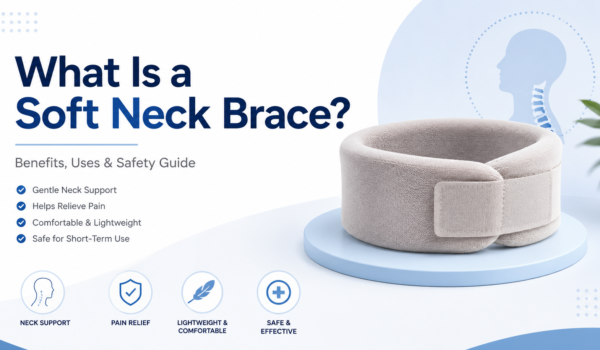
Learn more about the device’s intended role in What Is a Soft Neck Brace?
Use a sleep position that keeps the neck neutral
Hospital guidance commonly recommends sleeping on the back with a thin pillow or on the side with enough pillow support to keep the head aligned. Extra pillows can push the head forward. Stomach sleeping requires substantial neck rotation and is generally unsuitable when a collar is being used to control movement.
| Sleep position | Main consideration while wearing a collar |
|---|---|
| Back | Use a thin pillow if advised; avoid pushing the head forward |
| Side | Fill the space between the head and mattress so the neck stays level |
| Stomach | Usually unsuitable because the neck must rotate |
| Reclined | May help comfort in some recovery plans; confirm with the clinician |
Keep the collar and skin dry
Warm bedding and overnight sweating can trap moisture. Check the skin before and after sleep, especially beneath the chin and around the back edge. Follow the manufacturer’s cleaning instructions and let the collar dry fully.
Potential Risks of Overnight Use
Skin pressure and irritation
Hours of continuous contact increase heat, moisture, and friction. Persistent redness, blistering, broken skin, or drainage should be addressed promptly.
Poor head position
A collar of the wrong height can hold the jaw or head at an uncomfortable angle for hours. Morning headache, jaw pain, or increased neck pain may signal a fit problem.
Swallowing or breathing discomfort
The collar should never feel like it is closing the throat. New snoring, gasping, shortness of breath, choking, or difficulty swallowing needs attention rather than a tighter fit.
Stiffness and reliance
Nightly use can add many hours of reduced movement. When it is not medically required, this may contribute to stiffness or dependence on the sensation of support. Read about soft neck brace side effects before making overnight wear routine.
Delayed evaluation
Morning neck pain can come from pillow height, sleep position, muscle strain, arthritis, nerve irritation, or other causes. A collar may change the symptom without identifying the cause.
Does a Soft Neck Brace Help Neck Pain While Sleeping?
Some people feel more comfortable because the collar limits extreme bending and provides a positional cue. That is an individual symptom response, not proof that the collar treats the source of the pain.
For general neck pain, routine collar use is not strongly supported. The NHS advises against wearing a neck collar for ordinary neck pain unless a doctor recommends it, emphasizing movement instead. If nighttime pain repeatedly wakes you, radiates into an arm, or persists despite changes to sleep position and pillow setup, arrange an assessment.
See Soft Neck Brace for Neck Pain: Does It Help? for a broader review of the evidence.
How Long Can You Sleep in a Soft Neck Brace?
Do not create a nightly schedule without knowing why the collar is being used. A clinician may require continuous overnight wear for a defined recovery period, recommend a short trial, or advise against nighttime use entirely.
If the collar is optional and you wake with increased pain, pressure, numbness, headache, swallowing difficulty, or skin irritation, stop using it and reassess. Our duration guide explains how long to wear a soft neck brace during the day and night.
When to Contact a Healthcare Professional
Seek urgent care for breathing difficulty, new weakness, spreading numbness, loss of coordination, difficulty walking, severe pain after trauma, or loss of bladder or bowel control.
Contact the treating team promptly if a prescribed collar no longer fits, becomes damaged, causes persistent skin redness, or makes swallowing difficult. Do not switch from a prescribed rigid collar to a soft collar for comfort without approval.
Frequently Asked Questions
Can I sleep on my side with a soft neck brace?
Often yes, if the clinician allows it and the pillow supports the head so the neck remains neutral. Follow any condition-specific restrictions.
Should I use a pillow while sleeping in the collar?
Many hospital instructions suggest a thin pillow on the back or adequate support on the side. Pillow height should prevent the head from bending forward or sideways.
Can I wear a soft collar every night for chronic neck pain?
Not without assessment. Regular overnight wear may increase stiffness and can delay identifying the cause of persistent pain.
Can a soft neck brace treat sleep apnea?
It is not an established replacement for CPAP or professional sleep-apnea care. Early research is limited and should not be used to self-treat a potentially serious breathing disorder.
The Bottom Line
Sleeping in a soft neck brace can be appropriate when it is part of a specific medical plan. It should not become a nightly treatment for ordinary neck pain by default. Confirm the purpose, use the correct fit and pillow height, monitor breathing, swallowing, and skin, and seek help when symptoms worsen or neurologic warning signs appear.
References
- Leeds Teaching Hospitals: Cervical neck collars and sleeping guidance.
- NHS: Neck pain and stiff neck.
- Bilgin et al. Effects of a soft cervical collar in obstructive sleep apnea.
- London Health Sciences Centre: Cervical collar care.
- Cervical collar use following cervical spine surgery: a systematic review.