
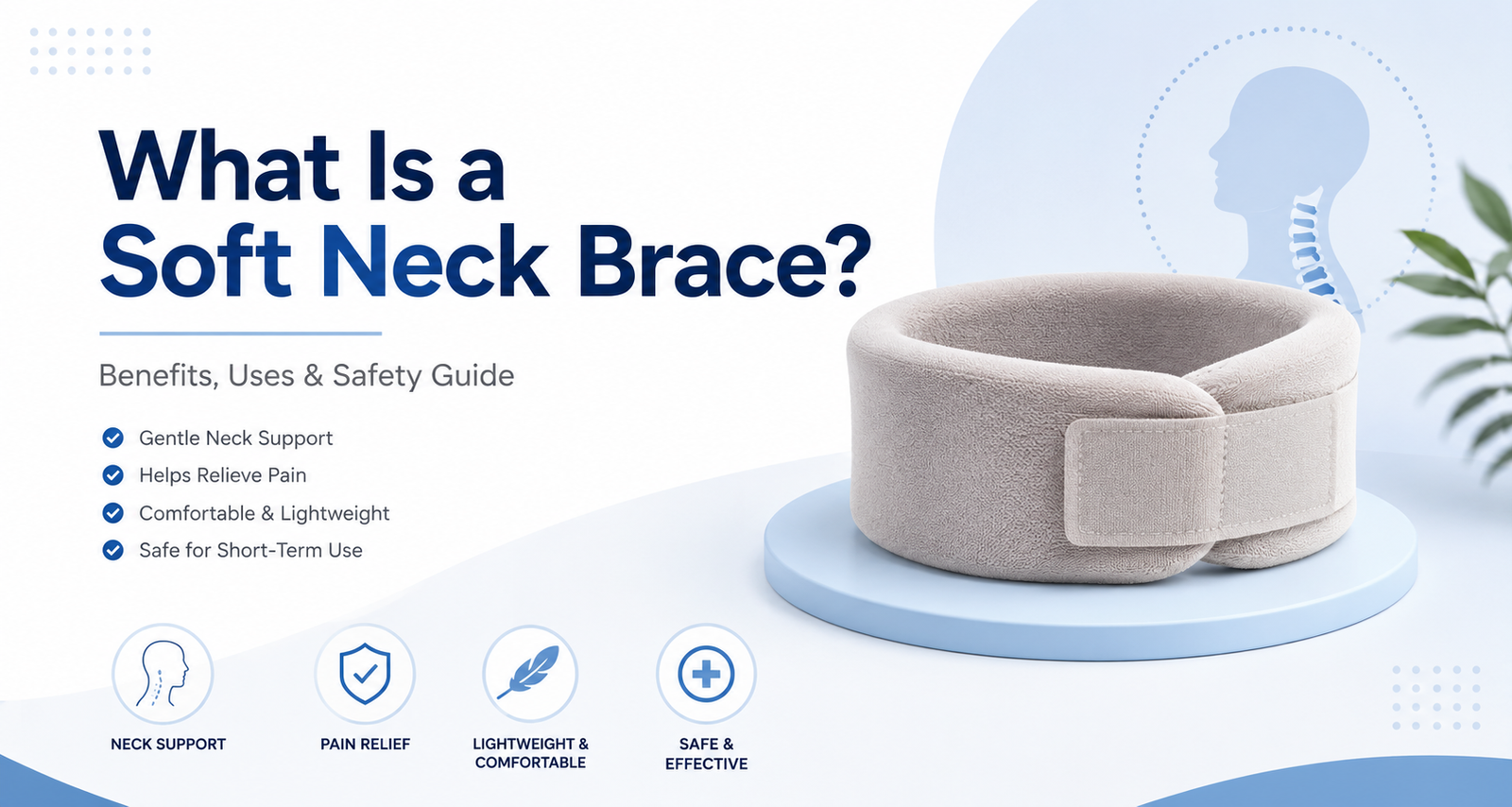
What Is a Soft Neck Brace? Benefits, Uses & Safety Guide
Neck pain can make even the simplest daily activities uncomfortable. Looking over your shoulder while driving, sitting at a desk for hours, or even sleeping can become difficult when your neck muscles are strained or irritated. In these situations, many people come across the term soft neck brace and wonder whether it could actually help.
A soft neck brace—also known as a soft cervical collar—is one of the most commonly recommended support devices for temporary neck discomfort. Unlike rigid medical collars used after severe trauma, a soft neck brace provides gentle support while still allowing limited natural movement. Its purpose is not to completely immobilize the neck, but to reduce unnecessary motion that may increase pain during the healing process.
Although soft neck braces are widely available, they are often misunderstood. Some people wear them for much longer than recommended, while others expect them to permanently fix posture or chronic neck pain. Understanding how these braces work—and when they should be used—is essential for getting the most benefit from them.
What Is a Soft Neck Brace?
A soft neck brace is a lightweight orthopedic support made from high-density foam wrapped in a comfortable fabric cover. It fits around the neck using an adjustable hook-and-loop fastener, helping to support the head while limiting excessive cervical movement.
Unlike hard cervical collars, which are designed to stabilize the neck after serious injuries or surgery, soft neck braces are intended for temporary support and comfort. They allow gentle movement while reducing strain on the muscles, ligaments, and joints of the cervical spine.
Because the average adult head weighs between 10 and 12 pounds (4.5–5.5 kg), even minor neck injuries can place significant stress on the surrounding muscles. A soft neck brace helps reduce some of that workload during recovery.
How Does a Soft Neck Brace Work?
A soft neck brace does not “hold” the neck in place. Instead, it works by encouraging better movement patterns and reminding the wearer to avoid sudden or excessive motion.
By providing light support beneath the jaw and around the neck, the brace helps reduce muscle fatigue while promoting a more neutral head position.
Some healthcare professionals also believe that wearing a soft cervical collar can increase body awareness, making people naturally move their neck more carefully during recovery.
A soft neck brace may help by:
- Supporting the weight of the head during movement
- Reducing unnecessary neck rotation
- Limiting painful bending motions
- Decreasing muscle fatigue
- Providing short-term comfort after minor injuries
- Encouraging better posture awareness
It is important to remember that a brace supports recovery—it does not treat the underlying cause of neck pain by itself.
Common Uses of a Soft Neck Brace
A soft neck brace may be recommended in a variety of situations where temporary support is beneficial.
Mild Neck Muscle Strain
Muscle strains caused by sports, exercise, poor sleeping positions, or sudden movements often improve with rest and conservative care. A soft neck brace may reduce discomfort while the irritated muscles recover.
Minor Whiplash Injuries
Following a low-impact vehicle accident or sudden neck movement, some individuals experience mild whiplash symptoms. Depending on the severity of the injury, a healthcare provider may recommend short-term use of a soft cervical collar alongside gentle movement and rehabilitation.
Temporary Neck Pain
People experiencing temporary neck discomfort from overuse or repetitive daily activities sometimes find additional comfort while wearing a properly fitted brace for limited periods.
Recovery After Certain Procedures
After specific medical procedures involving the cervical spine, physicians may advise patients to wear a soft neck brace for additional comfort during the early recovery phase.
Benefits of Wearing a Soft Neck Brace
When used appropriately, a soft neck brace may provide several practical benefits during recovery.
| Benefit | How It Helps |
| Gentle Support | Reduces stress on tired neck muscles. |
| Improved Comfort | Helps decrease painful movement during daily activities. |
| Better Neck Awareness | Encourages safer neck positioning. |
| Reduced Muscle Fatigue | Supports the weight of the head during recovery. |
| Easy to Wear | Lightweight materials improve comfort throughout the day. |
These benefits are generally most noticeable during the early stages of recovery. Long-term use without medical guidance is usually not recommended because prolonged dependence on a brace may reduce normal muscle activity.
Who May Benefit from a Soft Neck Brace?
A healthcare provider may consider recommending a soft neck brace for people experiencing:
- Mild cervical muscle strain
- Temporary neck stiffness
- Minor ligament injuries
- Early recovery from mild whiplash
- Neck discomfort after certain medical procedures
- Short-term support during painful flare-ups
The decision to use a brace should always depend on the individual’s symptoms, medical history, and professional medical advice rather than self-diagnosis.
Who Should Avoid Wearing a Soft Neck Brace?
Although a soft neck brace can be helpful in certain situations, it is not the right solution for everyone. Wearing one without understanding the underlying cause of neck pain may delay proper diagnosis or treatment.
In general, a soft neck brace should not be used as a long-term solution for chronic neck pain or as a substitute for medical care.
People should seek professional medical evaluation instead of relying on a neck brace if they experience:
- Severe neck pain after a fall or accident
- Numbness or tingling in the arms or hands
- Weakness in the upper limbs
- Loss of balance or coordination
- Fever accompanied by neck stiffness
- Difficulty breathing or swallowing
- Persistent pain that continues to worsen
These symptoms may indicate a more serious condition that requires immediate medical attention.
Possible Risks of Wearing a Soft Neck Brace
Like any supportive device, a soft neck brace should be used appropriately. Wearing it for longer than recommended may lead to unnecessary dependence and reduced muscle activity.
Potential drawbacks include:
Muscle Weakness
The neck muscles are designed to stabilize the head naturally. Continuous brace use may reduce muscle engagement over time.
Reduced Range of Motion
Using a brace for extended periods without movement or rehabilitation may contribute to temporary stiffness.
Poor Fit
A brace that is too loose provides little support, while one that is too tight may cause discomfort, pressure, or difficulty swallowing.
False Sense of Security
A neck brace helps manage symptoms but does not treat the underlying cause of pain. Proper diagnosis remains essential.
Soft Neck Brace vs. Hard Cervical Collar
Many people assume that all neck braces serve the same purpose, but there are important differences.
| Feature | Soft Neck Brace | Hard Cervical Collar |
| Support Level | Mild to Moderate | Maximum |
| Flexibility | Allows limited movement | Significantly restricts movement |
| Comfort | High | Moderate |
| Typical Use | Muscle strain, mild pain, temporary support | Serious injuries, fractures, post-operative care |
| Prescription Required | Usually No | Often Yes |
A hard cervical collar is typically reserved for significant cervical spine injuries and should only be used under medical supervision.
Tips for Using a Soft Neck Brace Safely
To get the most benefit from a soft neck brace:
- Follow your healthcare provider’s instructions.
- Wear the brace only for the recommended duration.
- Remove it periodically if advised to perform gentle neck exercises.
- Keep the brace clean and dry.
- Replace the brace if the foam loses its shape or support.
- Avoid adjusting the fit too tightly.
Proper use can improve comfort while minimizing unnecessary complications.
Frequently Asked Questions
Can a soft neck brace cure neck pain?
No. A soft neck brace does not cure neck pain. It provides temporary support that may help reduce discomfort while the underlying condition improves.
Is it safe to sleep with a soft neck brace?
Some healthcare providers recommend wearing a brace while sleeping for specific conditions, while others do not. The decision depends on the underlying cause of neck pain and should follow medical advice.
Can I drive while wearing a soft neck brace?
Driving with restricted neck movement may reduce your ability to check blind spots and react safely. Unless specifically advised otherwise by your healthcare provider, driving while wearing a neck brace is generally discouraged.
How tight should a soft neck brace be?
The brace should fit comfortably without causing pressure, difficulty swallowing, or breathing problems. You should be able to slide one or two fingers between the brace and your neck.
Can a soft neck brace improve posture?
A soft neck brace may temporarily encourage better head positioning by limiting excessive movement. However, it is not a permanent solution for poor posture, which usually requires strengthening exercises, ergonomic improvements, and healthy daily habits.
Final Thoughts
A soft neck brace can be a useful short-term support device for people recovering from mild neck injuries, muscle strain, or temporary cervical discomfort. Its primary role is to reduce excessive neck movement, improve comfort, and support the early stages of recovery—not to replace medical treatment or long-term rehabilitation.
The most effective approach is to use a soft neck brace as part of a broader recovery plan that may include activity modification, posture correction, physical therapy, and professional medical guidance when needed.
When used appropriately and for the right reasons, a soft neck brace can provide meaningful support while allowing the neck to heal naturally.
References
- American Academy of Orthopaedic Surgeons (AAOS)
- Mayo Clinic
- Cleveland Clinic
- NHS (National Health Service)
- PubMed – Cervical Collar and Neck Pain Research