Soft Neck Brace for Neck Pain: Does It Help?
A soft neck brace may make some types of neck pain feel more manageable for a short time, but it is not a general cure. The collar can provide light support and remind you to avoid painful movement. Research has not shown that routine or prolonged collar use reliably speeds recovery from uncomplicated neck pain or whiplash, and many current guidelines favor keeping the neck gently active unless a clinician advises otherwise.
Whether a collar is reasonable depends on what is causing the pain. A mild muscular flare, a recent operation, and pain with arm weakness are not the same problem and should not share the same treatment plan.
How Might a Soft Collar Reduce Neck Pain?
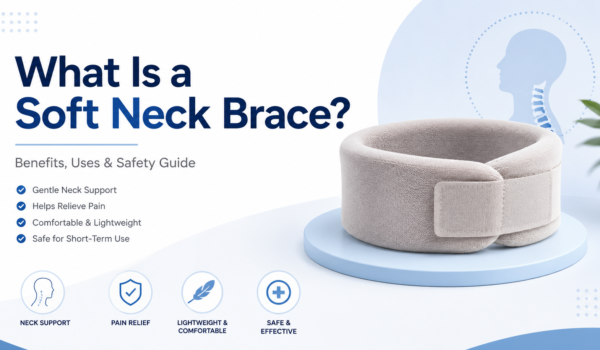
A soft cervical collar is made from flexible foam. It supports the area beneath the jaw and gives tactile feedback when the head moves. That may help in three ways:
- briefly reducing the feeling of muscular effort;
- discouraging sudden movements that trigger pain; and
- making the wearer more aware of head and neck position.
The effect is mainly symptomatic. The collar does not repair a strained muscle, remove pressure from a nerve, reverse arthritis, or restore spinal alignment. It also allows substantial cervical motion, so it is not adequate protection for a suspected unstable injury.
Read What Is a Soft Neck Brace? for a fuller explanation of its construction and purpose.
What Does Research Say?
Evidence for soft collars in common neck pain is limited and mixed. In a randomized trial of people with pain after a motor-vehicle collision, a soft collar did not improve the rate or degree of recovery at six weeks compared with usual care. Another randomized trial in whiplash found no advantage from wearing a soft collar for ten days instead of two days.
A review of cervical collars noted that some patients report symptom relief, but evidence for improved long-term outcomes is lacking. This difference is important: feeling more comfortable while wearing a brace does not necessarily mean the condition is healing faster.
The NHS advises people with ordinary neck pain not to wear a collar unless told to do so by a doctor, because keeping the neck moving is generally preferable.
When Might a Soft Neck Brace Help?
A short, painful muscular flare
For selected people with a clinician-assessed muscular problem, intermittent collar use may make a particular activity more tolerable. The collar should be a temporary aid while normal movement returns, not a way to avoid movement indefinitely.
Clinician-directed recovery
A healthcare professional may include a soft collar after a procedure, during a transition from another device, or within an individualized rehabilitation plan. Follow the specific schedule because the same collar can serve different purposes in different diagnoses.
Position awareness during a limited activity
The collar’s contact can remind someone not to repeatedly look down or turn sharply. It may help identify movement habits that provoke discomfort. Lasting improvement, however, usually comes from changing the activity, work setup, or movement pattern—not from continued collar use.
When Is a Soft Collar Unlikely to Be the Best Answer?
Uncomplicated everyday neck pain
Many episodes improve with time, gentle movement, a suitable pillow, activity modification, and appropriate pain management. Routine collar use may add stiffness without addressing the cause.
Chronic or recurring pain
Repeatedly reaching for a brace can mask a pattern that deserves assessment. Persistent pain may involve sleep setup, workload, ergonomics, strength, stress, joint disease, nerve irritation, or another medical issue.
Suspected pinched nerve
Pain traveling into the shoulder or arm, tingling, numbness, or weakness can indicate nerve involvement. A collar cannot diagnose or cure a pinched nerve. New weakness or progressive sensory changes require medical evaluation.
Trauma or possible instability
A soft collar does not reliably immobilize the neck. After a significant collision, fall, diving injury, or direct blow, do not use a store-bought brace as a substitute for assessment.
Soft Neck Brace vs. Keeping the Neck Moving
For many uncomplicated neck problems, the question is not “brace or nothing.” The alternative is usually a gradual return to comfortable movement.
| Approach | Possible advantage | Possible drawback |
|---|---|---|
| Brief soft-collar use | Temporary comfort and movement reminder | Can encourage reliance if extended |
| Gentle normal movement | Maintains mobility and muscle activity | May initially feel uncomfortable |
| Clinician-guided exercise | Targets strength, control, or flexibility | Must match the diagnosis |
| Ergonomic changes | Reduces repeated aggravating positions | Requires consistent habit changes |
Pain is not always a signal to immobilize completely. At the same time, forcing painful movement is not the goal. A clinician or physical therapist can help identify an appropriate middle ground.
How Long Should You Wear One for Neck Pain?
There is no universal schedule. If a soft collar is suggested for ordinary neck pain, it is commonly framed as short-term or intermittent support. Prolonged self-directed wear may increase stiffness and reduce muscle activity.
See How Long Should You Wear a Soft Neck Brace? before extending use beyond a brief period.
What Are the Risks?
Potential problems include:
- skin irritation and sweating;
- chin, jaw, or throat pressure;
- uncomfortable swallowing from a poor fit;
- stiffness after reduced movement;
- reduced normal muscle activity with prolonged use;
- unsafe driving due to restricted head turning; and
- delaying evaluation of an underlying condition.
Our full guide to soft neck brace side effects explains how to recognize and reduce these risks.
When Neck Pain Needs Medical Attention
Seek urgent care for neck pain with new weakness, spreading numbness, loss of coordination, trouble walking, loss of bladder or bowel control, fever with severe stiffness, breathing or swallowing difficulty, or a severe headache after trauma.
Arrange a medical assessment when pain follows a significant accident, is severe or worsening, spreads into an arm, repeatedly returns, or does not improve over a few weeks.
Safer Use Tips
If a clinician agrees that a soft collar is appropriate:
- Confirm when to wear it and when to remove it.
- Keep the head neutral rather than tilted backward.
- Make sure swallowing and breathing are comfortable.
- Check the skin daily.
- Do not drive while head turning is limited.
- Do not exercise, lift, or play sports simply because the brace reduces discomfort.
- Ask how and when to return to normal movement.
Frequently Asked Questions
Is a neck brace good for a stiff neck?
Not routinely. A soft collar may give temporary comfort in selected cases, but gentle movement is often preferred for an uncomplicated stiff neck unless a clinician recommends a brace.
Can a soft neck brace cure neck pain?
No. It may reduce symptoms temporarily, but it does not treat every underlying cause.
Should I use a collar for a pinched nerve?
Do not self-diagnose or rely on a collar. Arm pain, tingling, numbness, or weakness should be assessed, especially when symptoms are new or worsening.
Can I sleep in the brace because my neck hurts at night?
Only when nighttime use fits the diagnosis and instructions. Read Can You Sleep With a Soft Neck Brace? before using one overnight.
The Bottom Line
A soft neck brace may provide short-term comfort for selected neck-pain situations, but it is not proven to speed recovery for routine uncomplicated pain and should not replace diagnosis, movement, or rehabilitation. Use one only with a clear purpose, a safe fit, and a limited schedule unless a treating clinician gives different instructions.
References
- Gennis et al. The effect of soft cervical collars on persistent neck pain after whiplash.
- Dehner et al. Two versus ten days of soft-collar immobilization after whiplash.
- When should a cervical collar be used to treat neck pain?
- NHS: Neck pain and stiff neck.
- The ability of external immobilizers to restrict movement of the cervical spine.