
Cervical Collar Types: Soft, Rigid & More
Quick answer: Cervical collars are not interchangeable. A soft foam collar provides limited support and acts mainly as a movement reminder; a rigid collar restricts motion more and may be prescribed after a particular injury or operation. A cervical-thoracic orthosis extends support onto the upper torso, while a halo is a specialist device for selected serious injuries. The diagnosis, not a product label, determines which option—if any—is appropriate.
“Cervical collar” describes a device worn around the neck, not a single level of protection. Some people encounter one during an emergency assessment; others receive a carefully fitted brace after surgery. Someone browsing online for a comfortable foam support is in a very different situation from a patient whose surgeon has prescribed rigid immobilization. This guide explains those differences without treating a shopping choice as a medical diagnosis.
The four broad types at a glance
| Type | Main feature | Typical context | Important limitation |
|---|---|---|---|
| Soft foam collar | Compressible ring around the neck | Occasionally recommended for short-term symptom relief | Does not stabilize a suspected fracture |
| Rigid cervical collar | Structured plastic shell and pads | Clinician-directed injury or post-operative care | Limits movement but does not eliminate it |
| Cervical-thoracic orthosis (CTO) | Neck component connected to chest/upper-back support | Selected spinal injuries or post-operative plans | Requires individual fitting and wear instructions |
| Halo vest | Ring fixed to the skull and attached to a vest | Selected serious injuries or surgery | Applied and managed by a specialist team |
These are categories, not a ranking where “more support” is always better. An unnecessary rigid brace can complicate everyday movement, skin care, and rehabilitation. A soft collar cannot substitute for a prescribed rigid device. The right question is what movement, if any, a treating clinician needs to limit.
Soft cervical collars
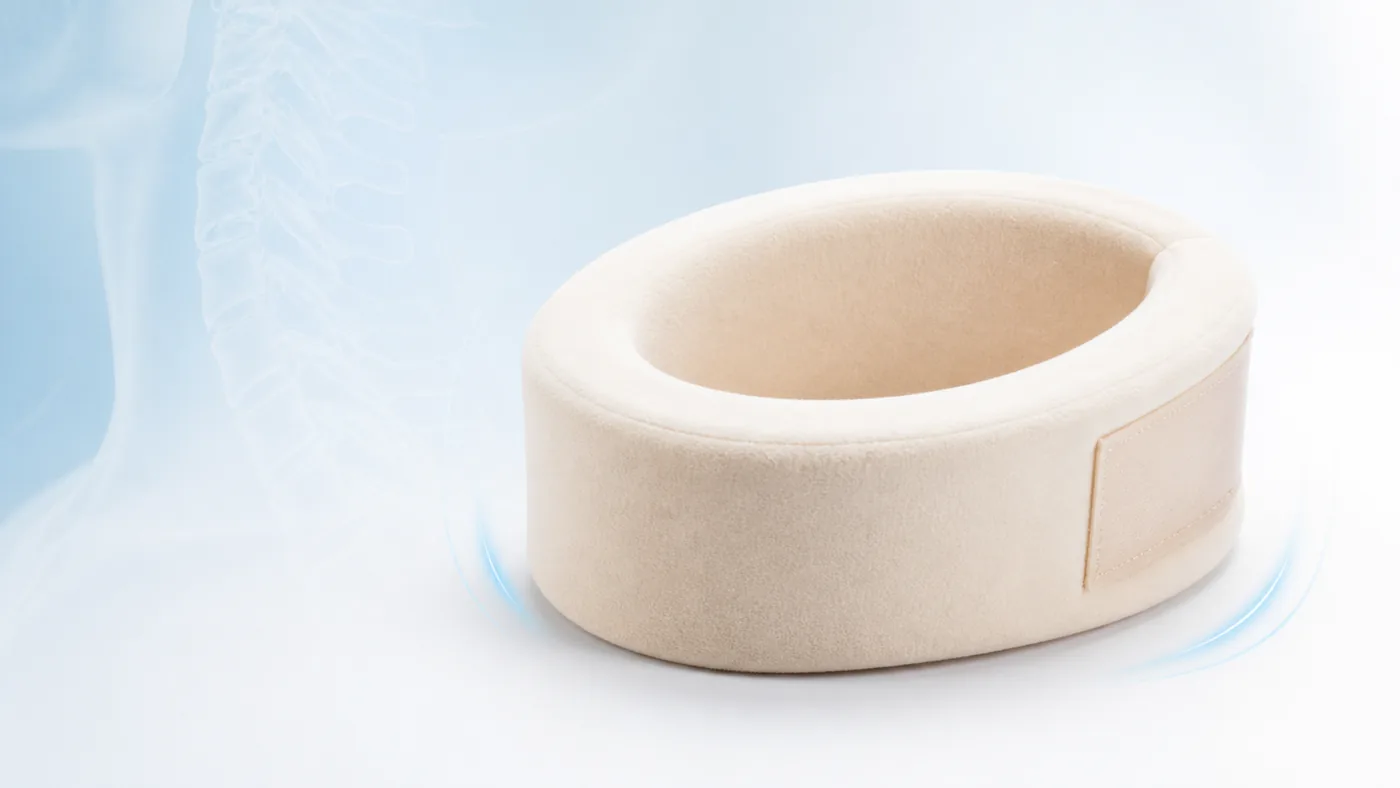
A soft collar is usually a padded foam band fastened around the neck. It may make some movements less comfortable and remind you to slow down, but it still permits meaningful neck motion. It should not be marketed as a way to immobilize the cervical spine. If a clinician recommends one for symptom relief, ask when to wear it, when to remove it, and how to keep your neck moving safely.
Routine collar use is generally not advised for ordinary nonspecific neck pain. The NHS encourages movement unless a doctor gives different instructions. Its whiplash guidance likewise says a neck brace or collar does not help routine recovery. A clinician may still recommend short-term soft-collar use in a particular case—for example, some people with a pinched nerve—but that is an individualized decision, not a blanket rule.
For a more detailed introduction to the everyday foam version, see what a soft neck brace is and soft neck brace benefits. Neither article should be used to choose a device after a traumatic injury.
Rigid cervical collars
Rigid collars typically use shaped plastic pieces with removable padding. A clinician may prescribe one when protecting a diagnosed cervical injury or after certain operations. The device is selected and fitted for the person’s anatomy and treatment plan. It supports alignment and limits movement; it does not make the neck completely motionless.
Rigid-collar instructions can be strict. Some patients are told to keep the collar on continuously, including overnight, while others follow a different plan. Whether it can be removed for washing, who can help remove it, and when it can be discontinued must come from the treating team. A fracture-care leaflet from Cambridge University Hospitals describes these decisions as specific to the injury and advises against driving with a hard collar because head turning is restricted.
Fit matters as much as shell material. A loose brace can rub and fail to provide intended support; an excessively tight one can cause discomfort or interfere with breathing. Persistent redness, blisters, broken skin, increased pain, or a change in sensation deserves a call to the brace team. Do not trim a prescribed collar or swap its pads for unrelated materials without approval.
Cervical-thoracic orthoses
A CTO combines a neck-supporting section with support over the chest and upper back. Extending the structure below the neck can be useful when the clinical goal involves the junction between the neck and upper spine or when a surgeon specifies this configuration. An NHS orthotics service describes it as a support that limits movement in both the neck and upper back after some injuries.
This is not an “upgrade” to buy because a collar feels weak. A CTO is measured, adjusted, and taught to the patient or caregiver. Instructions about bed use vary between conditions and designs: one patient may remove it while lying flat, while another may need separate overnight collar instructions. Ask the orthotist to demonstrate application and to write down the schedule that applies to you.
Halo vest systems
A halo vest is in another category altogether. A rigid ring is anchored to the skull and connected by rods to a vest. MedlinePlus describes its purpose as keeping the head and neck still while bones and ligaments heal after selected injuries or surgery. It is fitted by a medical team and remains on until that team removes it.
Halo care includes pin-site monitoring, vest and skin checks, and follow-up imaging. New numbness, walking difficulty, fever, loose hardware, or worsening pain should be reported promptly. A halo is never an over-the-counter solution for a sore neck.
What about named models and brands?
Names such as Aspen, Miami J, and Philadelphia often appear in searches. A brand or model name describes a particular design, not a diagnosis and not a guarantee that one design protects every cervical level equally. Even within a named product family, sizing, pad placement, and clinician instructions matter. If you already have a prescription, the meaningful comparison is whether the exact device supplied matches that prescription and fits properly—not which product page claims the greatest support.
The same principle applies to comfort features. Washable pads, adjustable closures, and lighter shells can make a prescribed device easier to manage, but they do not prove a particular collar is medically appropriate for you.
Questions to ask before wearing any collar
- What condition is the collar treating, and what movement should it limit?
- Is the device for comfort, restricted movement, or protection of a diagnosed injury?
- Exactly when should I wear and remove it, including sleep and bathing?
- Who should check the fit and skin, and what should I do if the fit changes?
- When will my treatment be reviewed, and what is the plan for stopping use?
If you have a prescribed collar, our guide to wearing a cervical collar can help you recognize the basic parts, but your own clinical instructions take priority.
When to seek urgent help
After a significant crash, fall, or other trauma, do not choose a collar online and assume the spine is protected. Seek emergency assessment, especially with new limb weakness or numbness, walking difficulty, or severe neck pain. Fever with a severe headache and stiff neck, trouble breathing or swallowing, or loss of bladder or bowel control also requires urgent medical attention. If a serious spinal injury is suspected, avoid unnecessary neck movement and follow emergency-service instructions.
Bottom line
The word “collar” covers devices with very different jobs. Soft foam may offer brief comfort in selected cases; rigid collars and CTOs are treatment devices fitted to a clinical plan; a halo is specialized immobilization. For most uncomplicated neck pain, a collar is not the default. Begin with the diagnosis and instructions, then choose the device—not the reverse.
Medical information only. This article is not a diagnosis or a prescription. Follow your own clinician’s advice, particularly after trauma or surgery.
Sources
Related posts





NEW POSTS

November 1, 2026
CTO Brace: How It Differs From a Cervical Collar
October 31, 2026
Medicare Neck Brace Coverage: What to Check

October 31, 2026
Can You Work With a Cervical Collar?

October 30, 2026